

Texan Bees

Texan Honey Bees
Rooted in South Texas Survivor Stock — Refined Through Careful Selection
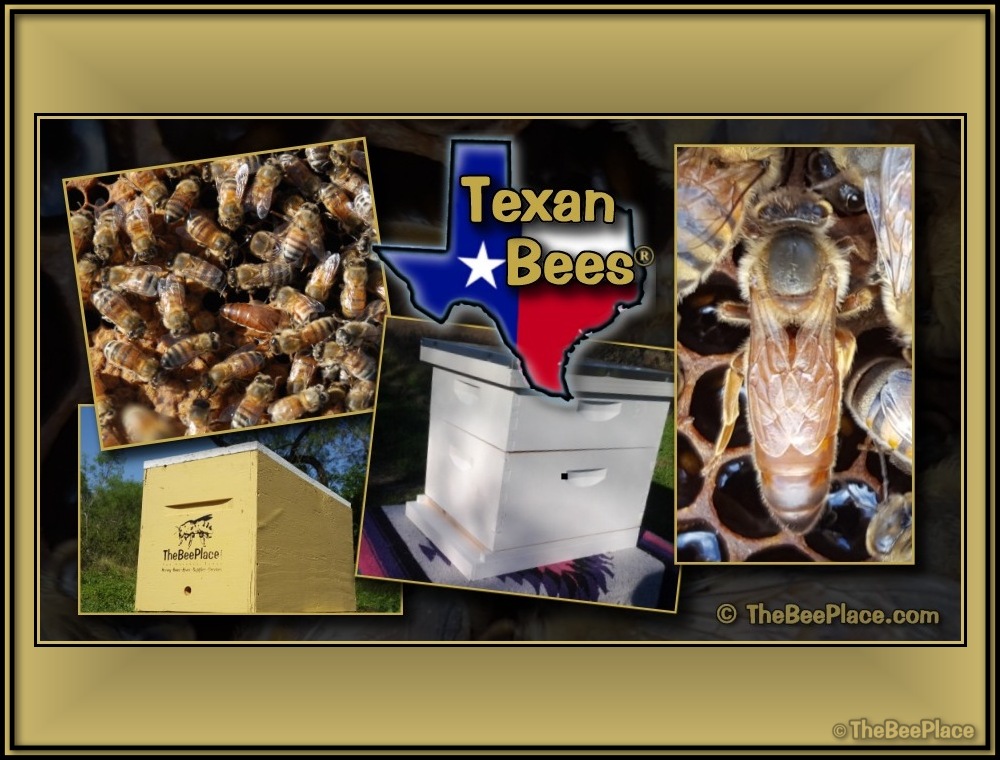
Foundation & Purpose
The Texan line began with colonies that demonstrated resilience during relocation and long-term survival under South Texas conditions.
These were carefully evaluated colonies observed for:
- Survivability
- Manageable temperament
- Productivity
- Consistent mite tolerance indicators
Only a small percentage met the standards required to enter the breeding program.
Over time, selection focused on balancing hardiness with steady improvement in temperament.

Selection Standards & Mite Monitoring
Breeder queens are selected from colonies that consistently demonstrate low mite counts under regular monitoring.
Colonies showing repeated mite counts in the 0–2 range during seasonal checks are considered breeding candidates.
Colonies requiring intervention are treated as needed but removed from the breeding pool.
The goal is not immunity, but measurable tolerance under responsible management.
Temperament and health must both meet standards before grafting.

Drone Saturation & Mating Zones
Successful queen rearing requires managing drone influence as effectively as possible.
Approximately 400–500 hives are distributed across multiple yards within a two- to three-mile radius of the mating area. These colonies are encouraged to produce drones from selected stock.
While open mating cannot be fully controlled, increasing the density of preferred genetics improves mating consistency.
Virgin queens are placed in mating nucs within these zones, strengthening probability of desirable outcomes.
This approach improves consistency without claiming complete control.

Toward Reduced Chemical Dependence
The long-term goal of the Texan program is to strengthen natural mite tolerance and reduce reliance on chemical treatments.
However, we are not currently a treatment-free operation.
All colonies are monitored. Mite levels are checked. Treatments are applied when thresholds are exceeded.
Breeding candidates are selected from colonies that demonstrate low mite counts without intervention.
Reducing treatment dependency is a direction — not a marketing claim.

What to Expect
Texan Bees are workable, productive colonies selected for South Texas conditions.
Most colonies will behave within expected tendencies. Individual variation exists.
Temperament has improved steadily through consistent selection. Today’s Texans are significantly more manageable than early foundation stock.
They are best suited for:
- Intermediate to experienced beekeepers
- Those comfortable using protective gear during full inspections
- Beekeepers interested in locally adapted stock
Handling style, weather, nectar availability, and colony condition all influence behavior.
As always, keep protective equipment nearby. It is easier to remove a veil than to put one on once bees become defensive.
