

Tropilaelaps Mites

A Potential Emerging Threat
Varroa is the current primary threat to honey bees.
Tropilaelaps mites may represent the next one.
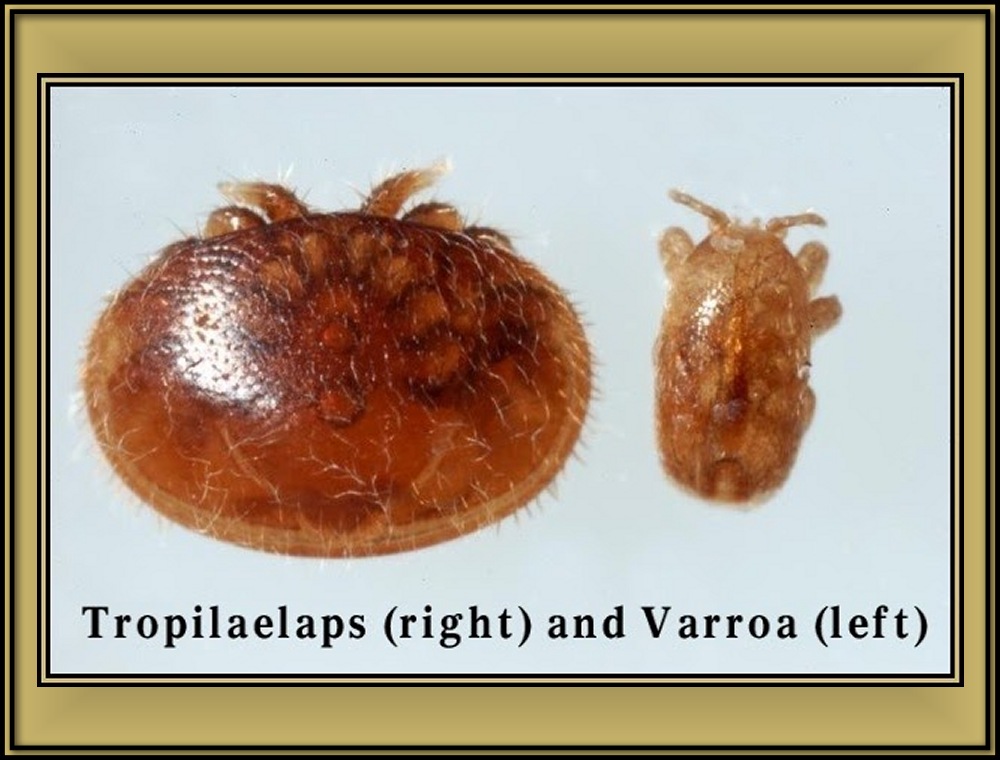
What Are Tropilaelaps Mites?
Tropilaelaps mites are parasitic mites originally associated with Asian honey bee species.
Like Varroa, they reproduce inside capped brood cells and feed on developing bees.
Several species exist, including *Tropilaelaps mercedesae*, which has drawn increasing attention from researchers.
Smaller and Faster
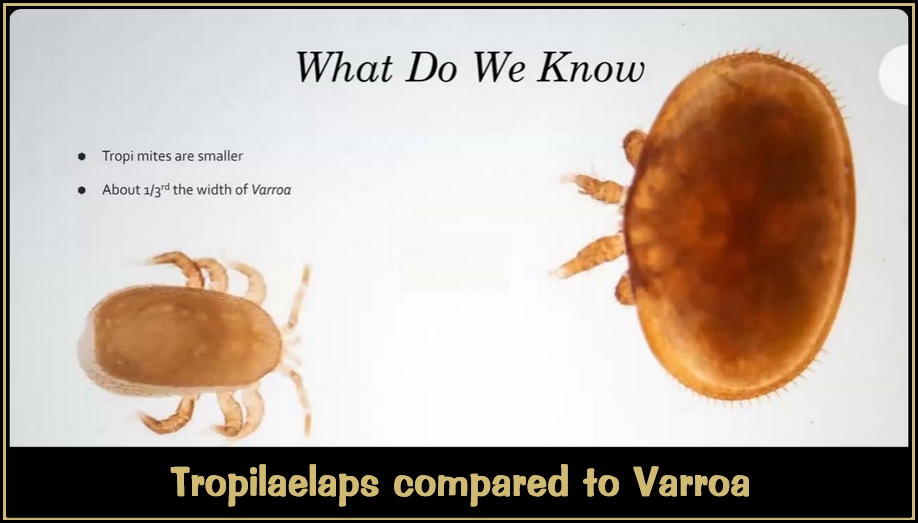
Tropilaelaps mites are smaller and move much more quickly than Varroa.
They reproduce rapidly and are highly dependent on continuous brood availability.
Because they cannot survive long without brood, their population growth can be explosive in heavily brooding colonies.

Why Beekeepers Are Paying Attention
Researchers consider Tropilaelaps a serious concern because:
- They reproduce quickly.
- They spread viruses.
- They do not respond to Varroa treatments, except Formic Acid.
- The only other known control method is forced brood breaks.
- They can overwhelm colonies rapidly under favorable conditions.
Countries where Tropilaelaps is established report significant colony losses when unmanaged.
Current Distribution
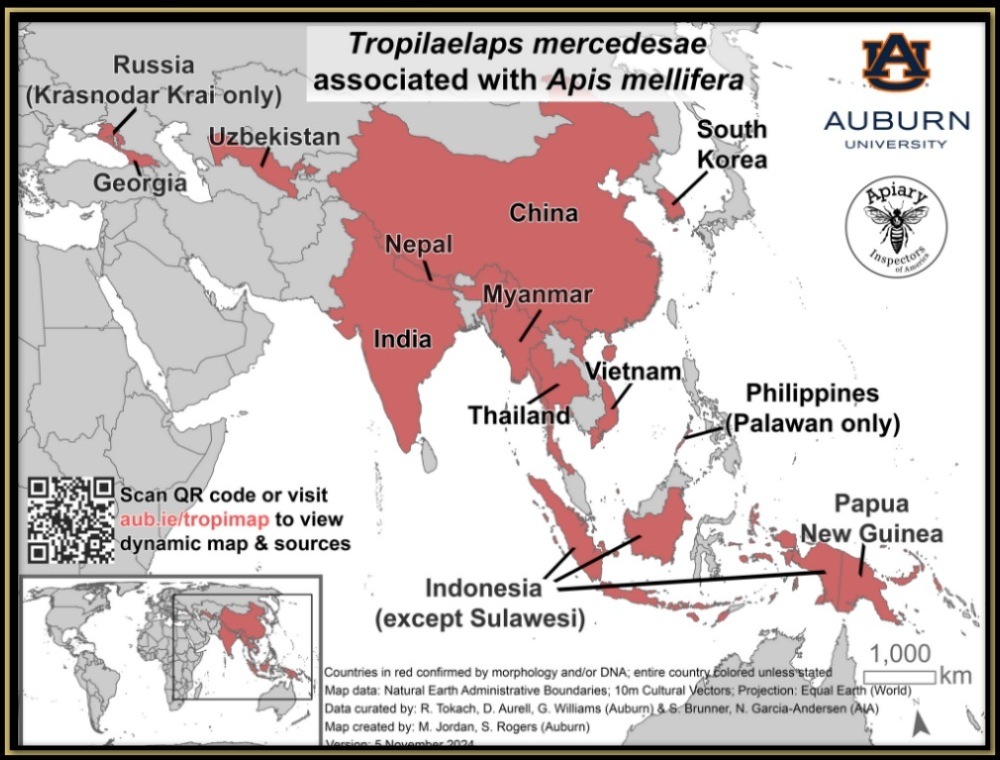
As of this writing, Tropilaelaps mites are primarily found in parts of Asia.
They have not been confirmed in North, Central, or South America.
Ongoing monitoring and biosecurity efforts are focused on preventing their introduction.
Staying Prepared
Leading honey bee research groups continue studying Tropilaelaps biology and control methods.
Awareness and early detection will be critical if these mites ever reach new regions.
For updated research and monitoring information, visit reputable honey bee health organizations and research institutions.
