

Mating Flights

Queen bees and the drones they mate with both fly into the wind during their mating flights
. By flying upwind toward designated "drone congregation areas," the queen can more easily distribute her pheromones, which the drones track by smell.
This upwind flight behavior is an important mating strategy for honey bees:
Following the scent: As the queen flies, her pheromone plume drifts downwind, creating a trail for the drones to follow.
Effective navigation: Bees rely heavily on visual and olfactory cues to navigate. Flying into the wind allows them to control their ground speed more easily and makes navigating by scent more effective.
Energetic challenge: Flying against the wind requires more effort than flying with it. However, because bees are strong fliers, the energetic cost is offset by the improved ability to control their position relative to the wind and scent.
Wind preference: Studies on bee flight show that they generally prefer flying upwind rather than downwind. Flying downwind in a strong tailwind can actually be more challenging for a bee to control, leading to higher variability in flight path and speed.
For a mating flight to occur, the weather must be warm with low wind and clear skies. If the wind is too strong, the queen will not fly and risks becoming a "drone layer" if she doesn't mate within a limited time
Before mating, a young queen performs short orientation flights to learn the landmarks surrounding her hive.
These brief flights help her map visual references — trees, buildings, terrain features — so she can safely return after traveling much farther distances during mating flights.
Without successful orientation, even a well-mated queen may fail to find her way home.

Drone Congregation Areas (DCAs)
Drone Congregation Areas are locations where drones from many colonies gather, waiting for virgin queens.
These areas tend to be somewhat consistent year after year, though they are not rigid or permanent structures. They are shaped by landscape, wind patterns, and local colony density.
Queens travel to these areas to ensure genetic diversity, rather than mating near their home hive.

Wind & Navigation
Queens typically fly upwind toward drone congregation areas.
As she flies, her pheromone plume drifts downwind, allowing drones to detect and track her scent. Flying into the wind gives the queen greater control over speed and direction while improving scent communication.
After mating, she generally returns with the wind, allowing a faster and more efficient flight home.

How Far Will She Go?
Queens are capable of flying several miles during mating flights.
Most matings appear to occur within a few miles of the home hive, though documented cases show that queens are capable of traveling significantly farther under certain conditions.
As with many things in nature, distance varies based on weather, landscape, and local drone density.

The Mating Process
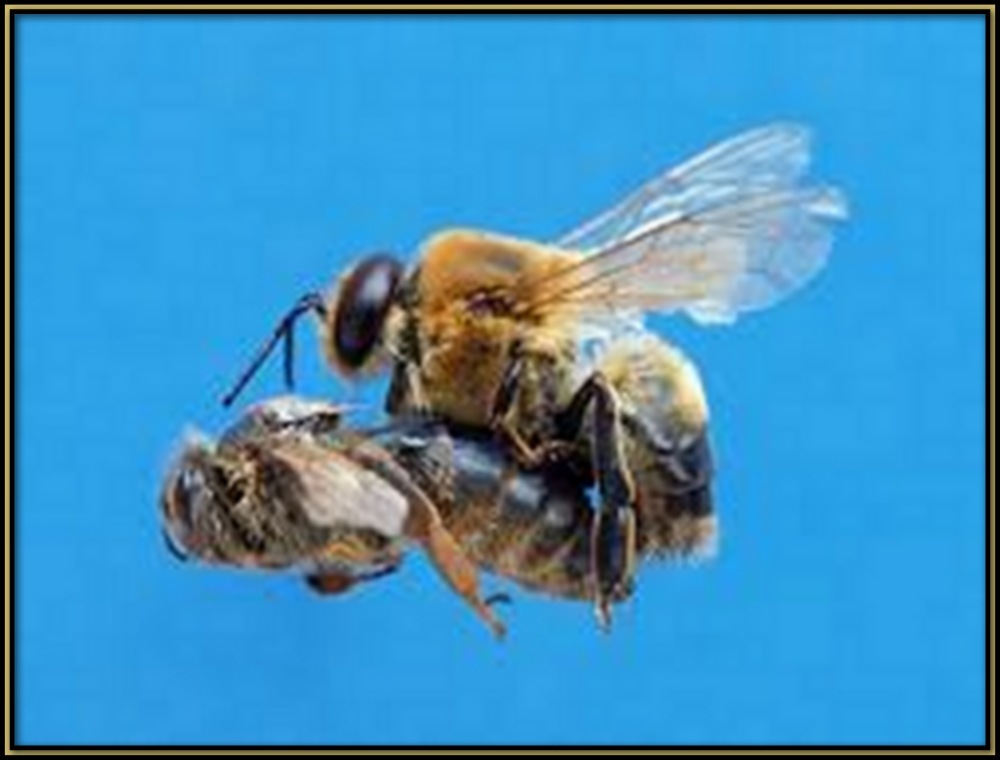
During one or more mating flights, a queen mates with multiple drones in mid-air.
Each successful mating contributes stored sperm that she will use for the rest of her life. Once adequately mated, she returns to the hive and begins egg laying within a few days.
This short window determines the genetic future of the entire colony.

Weather & Risk
Warm temperatures, moderate wind, and clear skies are typically required for successful mating flights.
If weather delays flights too long, or if a queen fails to return, the colony may become queenless.
Predators, wind conditions, navigation errors, and simple chance all play a role in whether a mating flight succeeds.

Why Management Matters
In regions where Africanized genetics are present in the feral population, open mating can produce unpredictable results.
A colony that begins gentle and manageable can change temperament dramatically after a natural requeening event.
This is why controlled breeding programs and intentional drone saturation strategies are used by some beekeepers to influence mating outcomes.
Nature ultimately decides — but experienced management can help stack the odds.

Bees do not read the books that beekeepers write.
They often follow patterns — but not rigid rules. Weather shifts, wind changes, and local conditions influence outcomes more than any textbook diagram.
