

Swarm Cells

The Million Dollar Question
Do we take them or leave them alone?
When swarm cells appear during a hive inspection, many new beekeepers immediately wonder whether they should remove them.
The correct answer depends on the condition of the colony and what outcome the beekeeper wants to achieve.
Understanding why the bees created the cells in the first place is the first step.
See Swarming to understand the colony behavior behind swarm preparation.
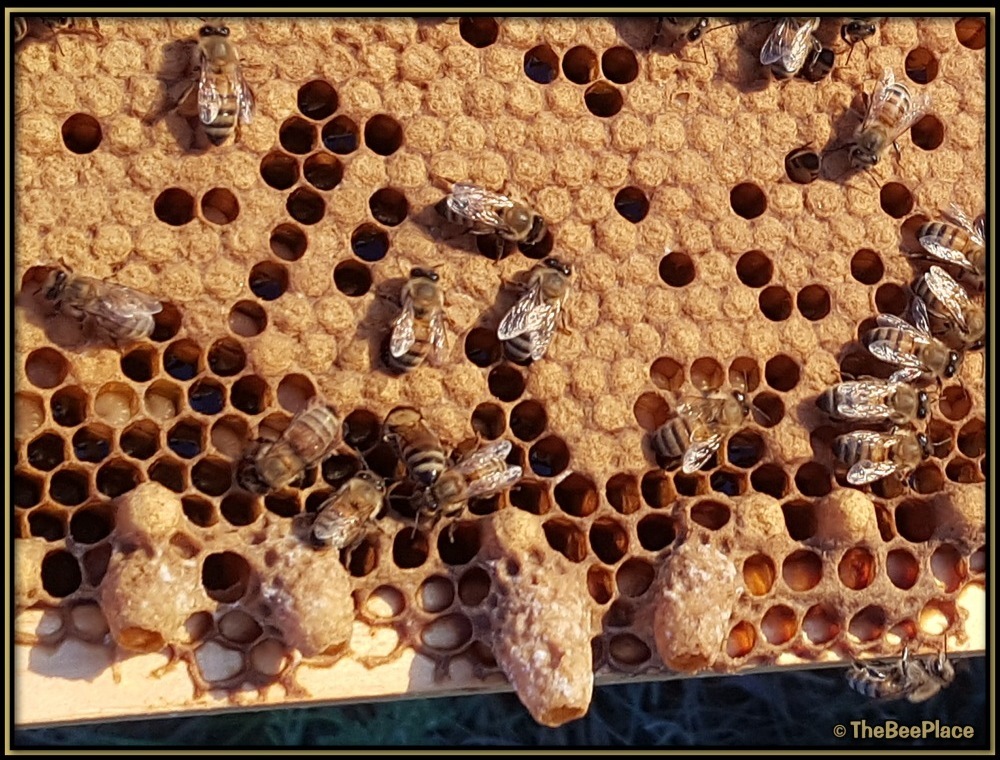
What Exactly Are Swarm Cells?
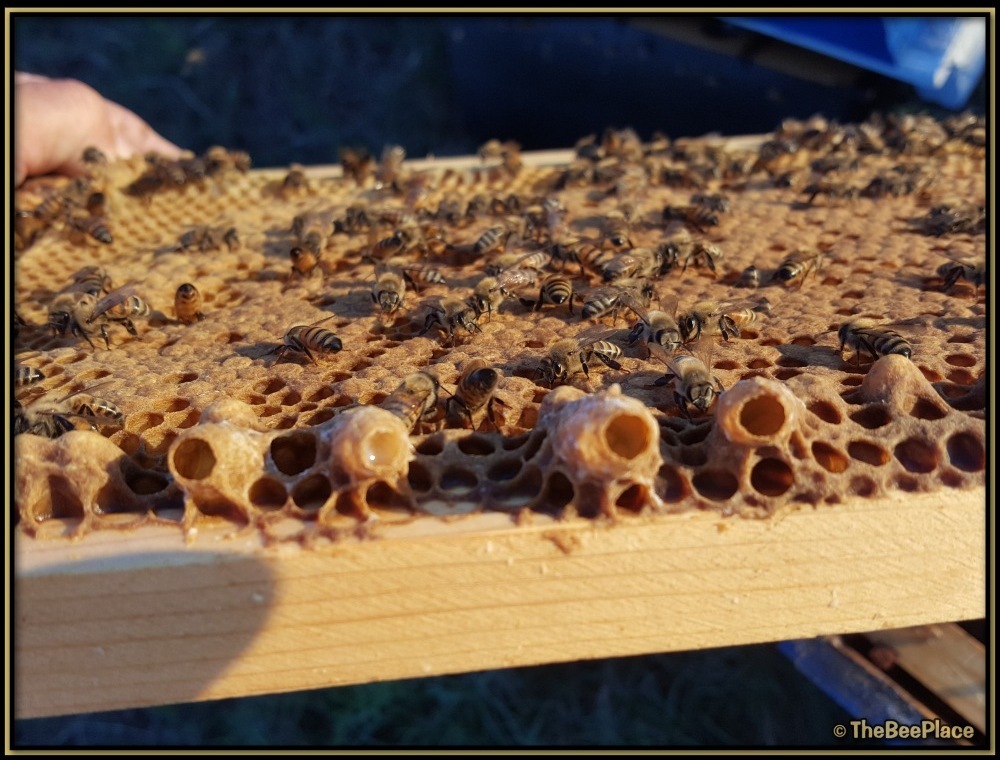
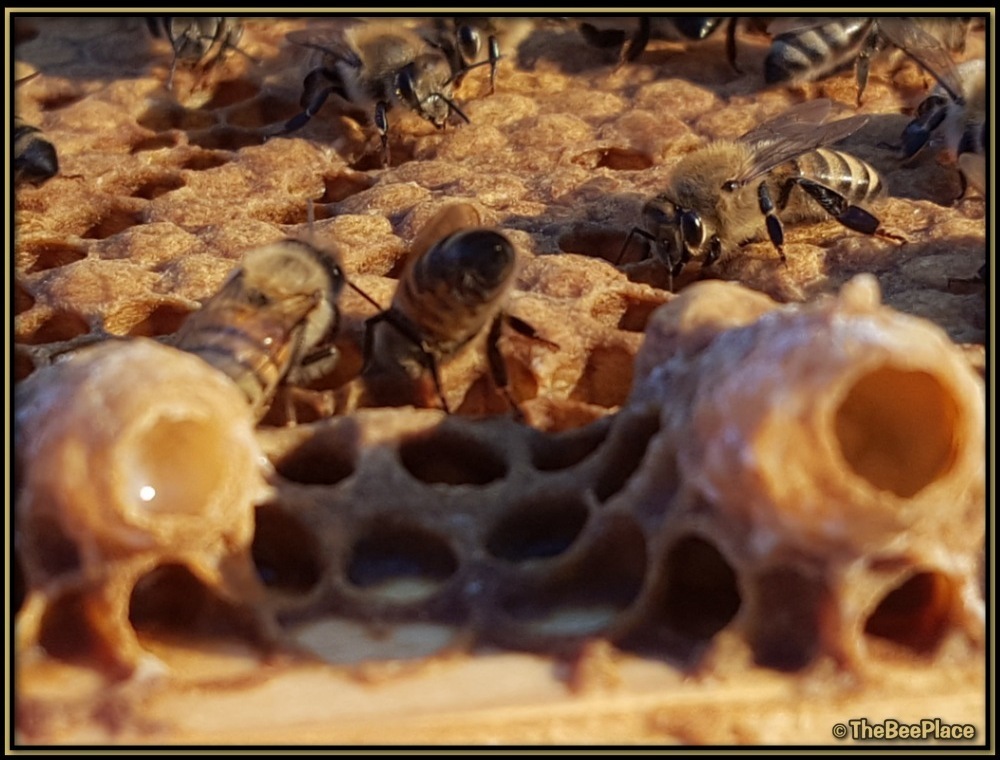
Swarm cells are elongated, peanut-shaped queen cells that typically hang from the lower edges of the brood nest.
They are constructed when a colony is preparing to divide, which is the natural process of colony reproduction.
Inside each cell, a developing queen larva is raised in a chamber large enough to accommodate her larger body and reproductive system.

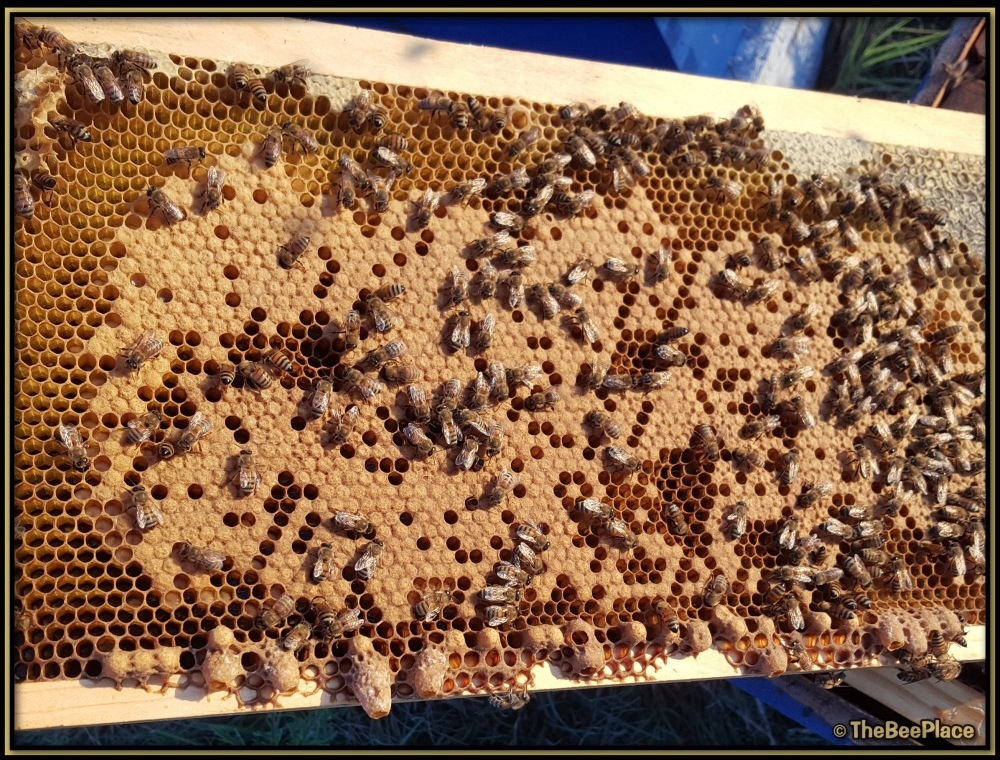
Location Tells the Story
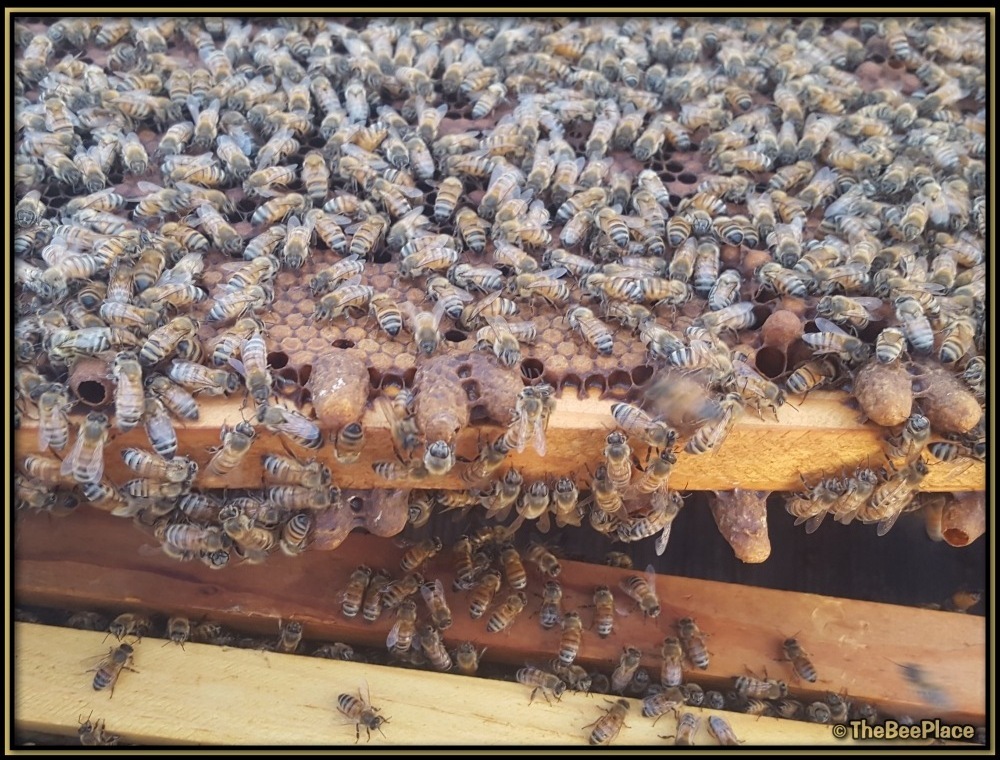
Swarm cells are most commonly found along the bottom edges of brood frames or hanging from the lower bars.
They are often built in groups rather than individually.
Seeing several cells along the bottom of multiple frames is one of the most recognizable signs that a colony is preparing to swarm.
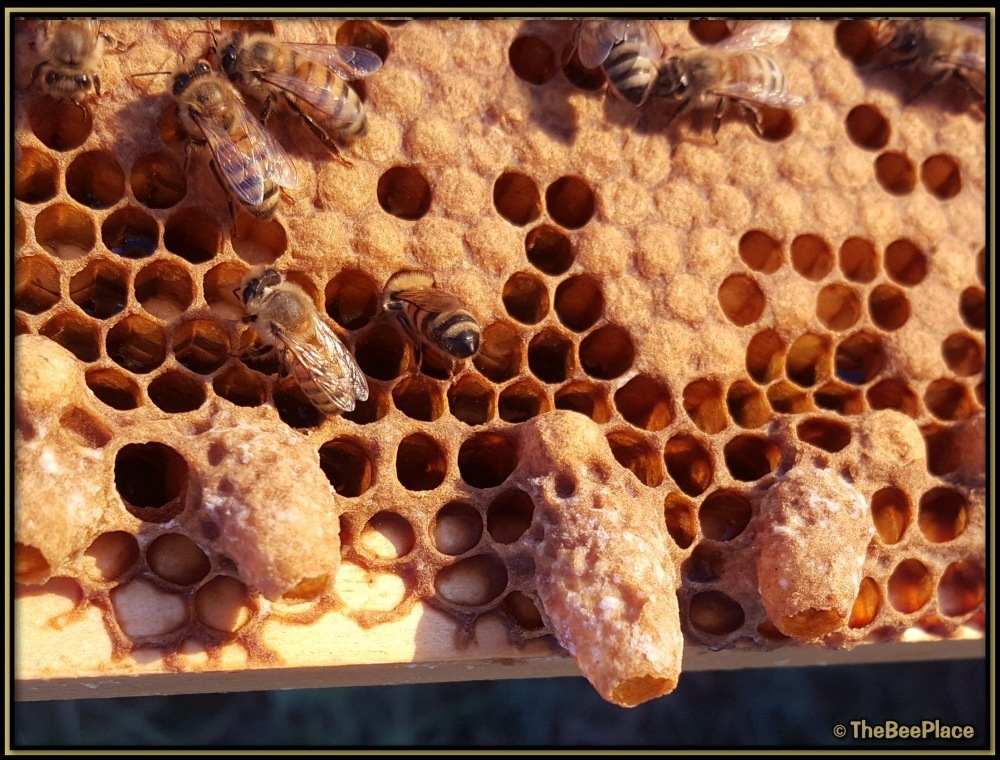
What Makes a Queen Different?
The key difference between a worker and a queen is diet and cell size.
Future queens are fed a continuous diet of Royal Jelly from the moment they hatch.
Workers receive Royal Jelly only briefly before transitioning to a pollen-based diet.
This constant nourishment and the enlarged queen cell allow the queen to develop larger and form a complete reproductive system.
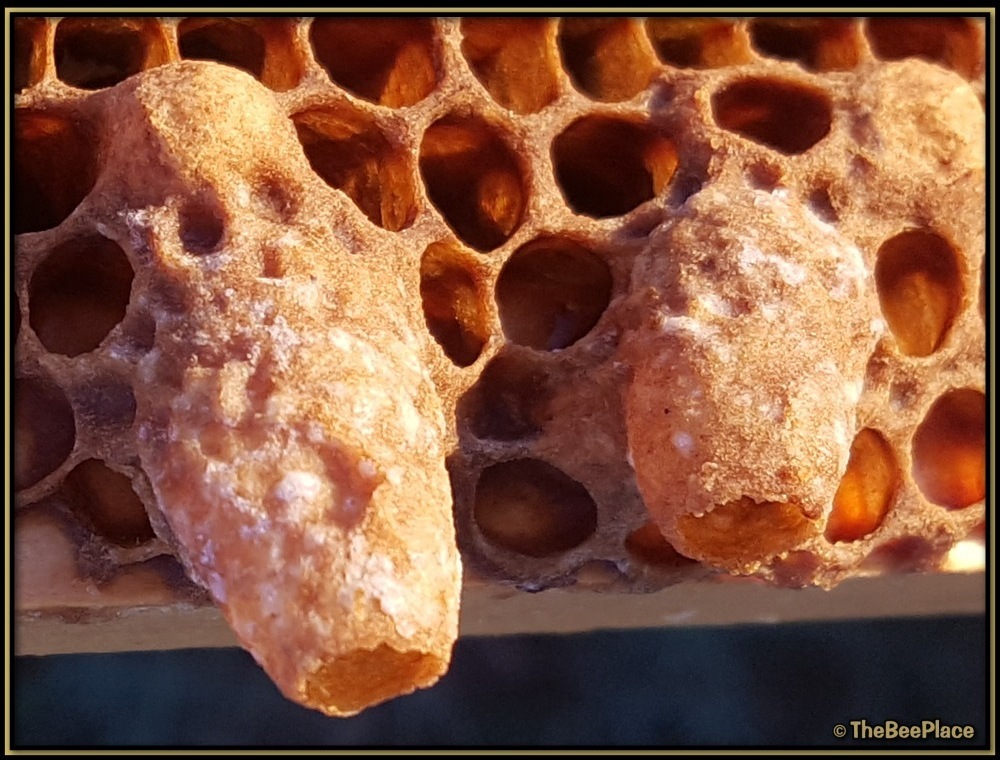
Development Timeline
From egg to emergence, a queen develops in about sixteen days.
The first several days are spent developing as a larva until the cell is capped.
During the following week the developing queen transforms inside the sealed cell before emerging as a virgin queen.
The First Task
Once she emerges, a virgin queen immediately begins eliminating competition.
If other queens have already emerged, they will seek each other out and fight.
If rival queens are still developing inside capped cells, the first queen may sting through the wax and destroy them before they hatch.
Only one queen will emerge as the new mother, the colony’s egg layer, heartbeat of the hive. Here pheromones are the glue that binds the colony and egg production ensures the future.
Maturation and Mating
After emerging, the virgin queen spends several days maturing before attempting mating flights.
She begins with short orientation flights and later travels to drone congregation areas where mating occurs in flight.
Weather, predators, and environmental conditions all play a role in whether she successfully returns to the hive.
Why Prevention Matters
If the new queen fails to return from her mating flights, the colony may become queenless.
By this time the hive often no longer has eggs young enough to raise another queen.
Without intervention the colony may gradually weaken.
For this reason many beekeepers focus on swarm prevention rather than relying on the colony to recover on its own.
In regions with Africanized bees, allowing the colony to raise their own queen can lead to more defensive traits.
Swarm Cells vs Queen Cups
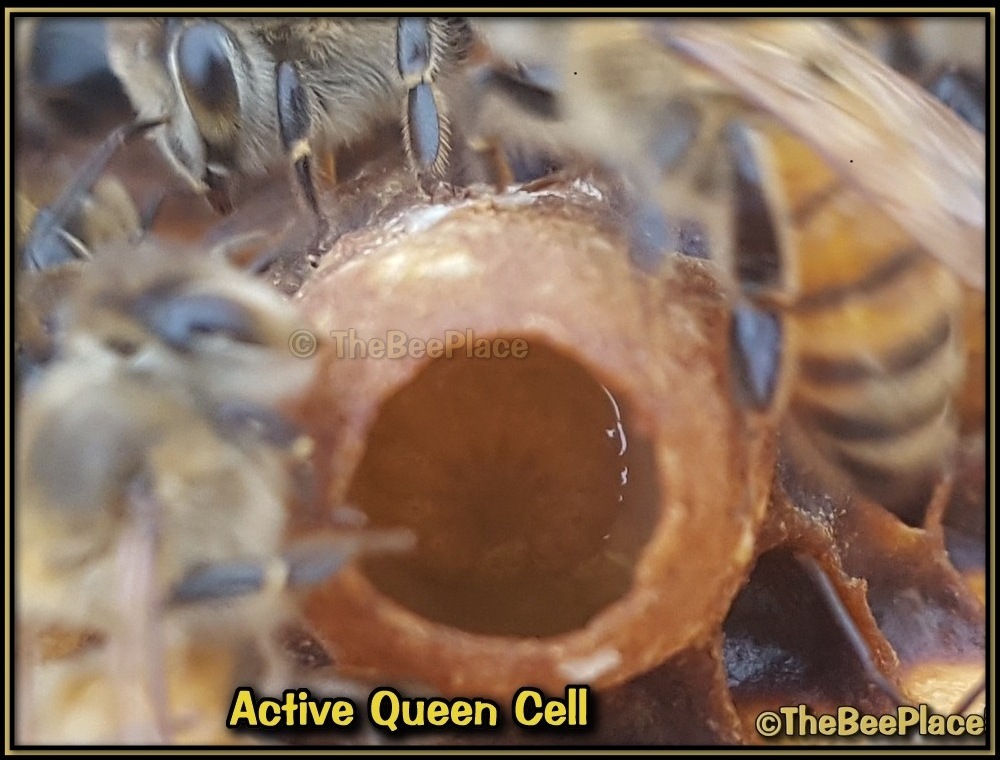
Queen cups are small acorn-shaped starter cells that colonies frequently build as a precaution.
Many remain empty and never develop further.
A true swarm cell will contain an egg or larva and will be actively extended and provisioned with Royal Jelly.
Seeing a few empty cups is normal. Seeing several large active cells with larvae inside usually indicates swarm preparation.
