

Supersedure Cells

A Quiet Replacement
When the Colony Decides to Replace Its Queen
Not all queen cells signal a swarm.
Sometimes a colony quietly prepares a replacement while the existing queen is still present.
This process is known as supersedure.
Rather than dividing the colony, the bees are simply preparing a new queen to take the place of one that may be aging, injured, or no longer performing well.
Where Supersedure Cells Appear
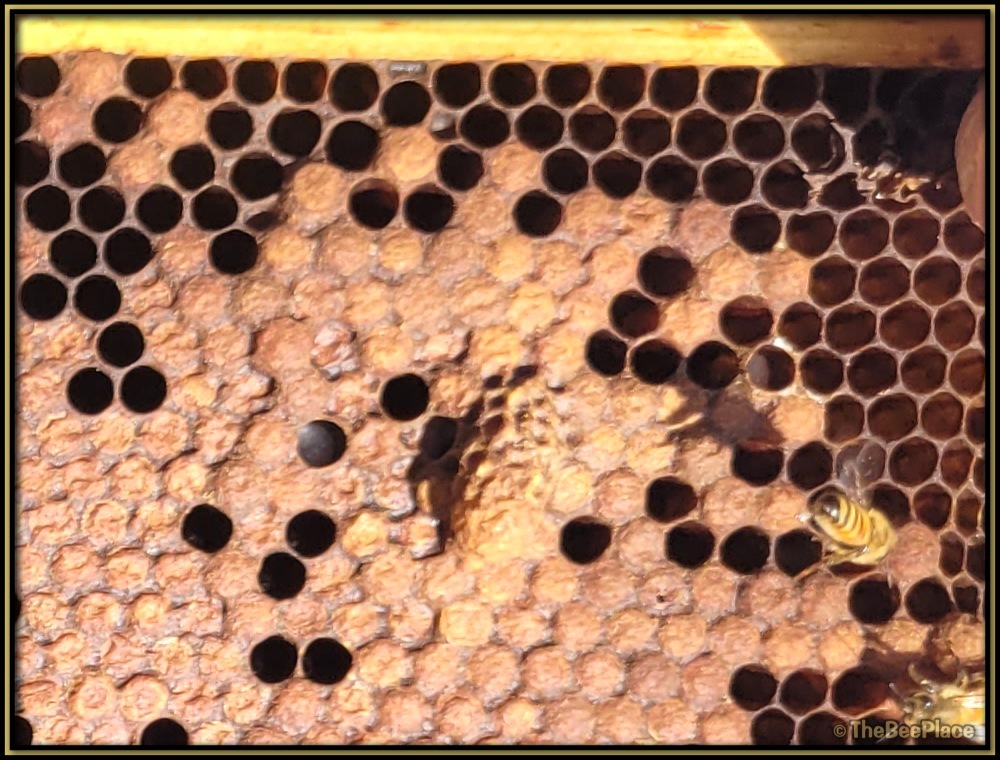
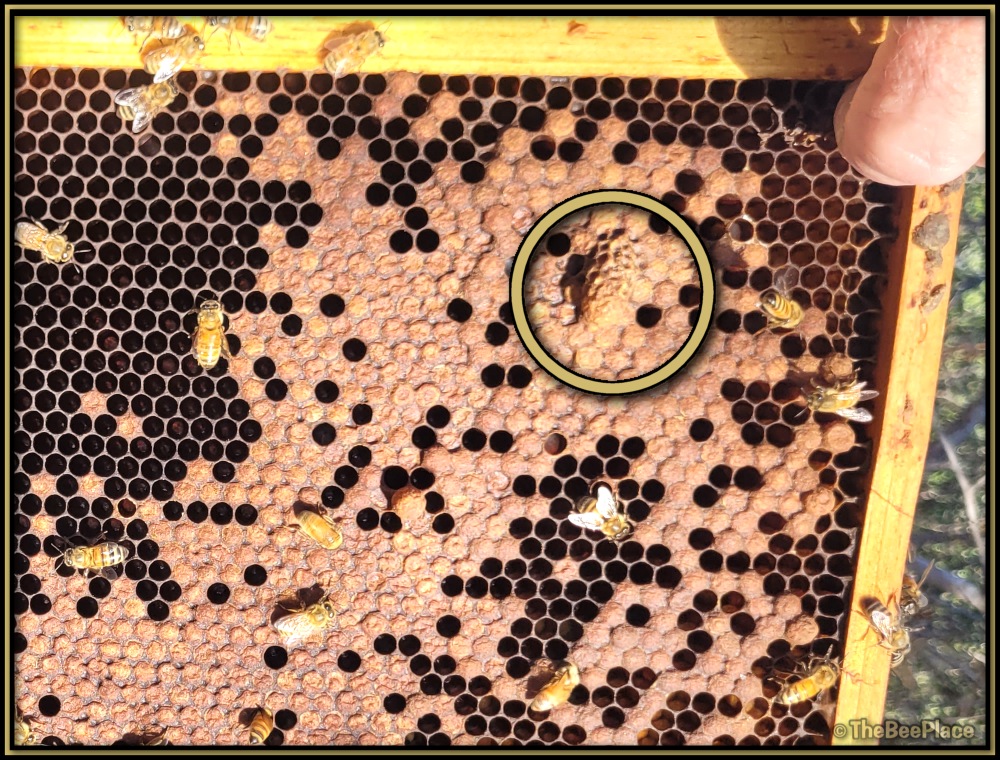
Supersedure cells are usually found in the middle of the brood nest rather than hanging from the bottom edges of the frame.
Unlike swarm cells, they are normally limited to just one or two cells.
Their location within the brood pattern is often the first clue that the colony is replacing a queen rather than preparing to swarm.

Why Bees Replace Their Queen
A queen may be replaced for several reasons.
She may be getting older, may have been injured, or may no longer produce the strong pheromone signal that keeps the colony organized.
When the colony senses that the queen is weakening, workers may begin raising a replacement before the situation becomes critical.

A Smooth Transition
In many cases the original queen continues laying eggs while the new queen develops.
Once the new queen emerges and mates successfully, the older queen usually disappears.
The colony transitions naturally to the new queen with very little disruption.

A Sign the Bees Are Paying Attention
Supersedure is often a sign that the colony is responding to subtle changes in the queen that may not yet be obvious to the beekeeper.
By raising a replacement early, the colony helps ensure its future without the risks that come from becoming suddenly queenless.
