

Emergency Cells

When the Queen Is Suddenly Gone
The Colony's Emergency Plan
When a colony suddenly loses its queen, the workers must act quickly.
Without a queen laying eggs, the colony has only a short window of time to raise a replacement from the youngest larvae available.
To do this, workers begin converting ordinary worker cells into emergency queen cells.
How Emergency Cells Are Made
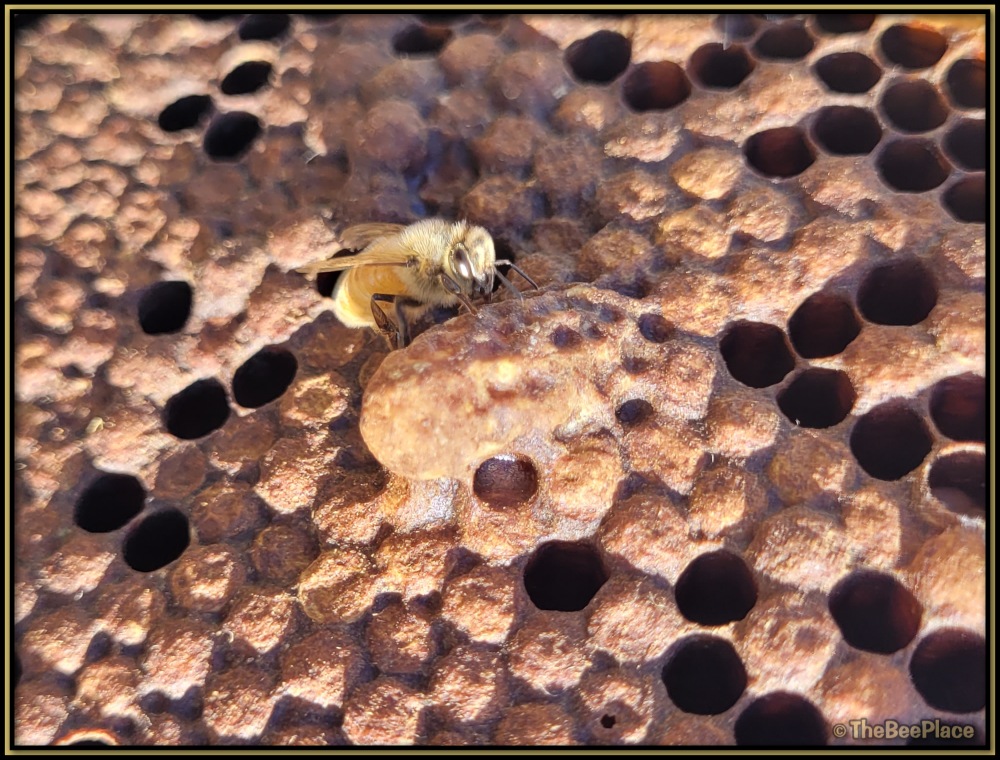
Unlike swarm or supersedure cells, emergency cells usually begin as normal worker brood cells.
Workers enlarge the cell and reshape it outward to create the space needed to raise a queen.
Because they are modified from existing cells, emergency queen cells often appear rough or irregular compared to the smooth peanut shape of swarm cells.


Where They Appear
Emergency cells can appear almost anywhere within the brood nest.
They are typically scattered across the face of the comb where young worker larvae were already present.
Their position within the brood pattern is one of the clues that the colony is reacting to the sudden loss of its queen.
A Race Against Time
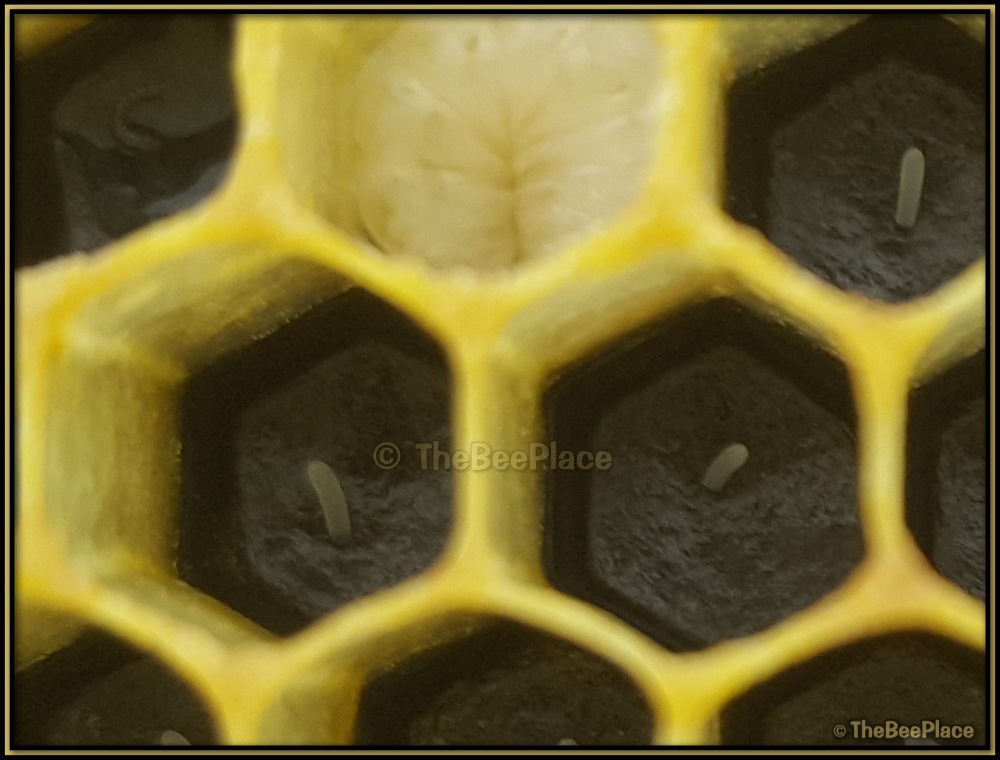
Emergency queen cells are the colony's last opportunity to replace a missing queen.
If no young larvae are available when the queen is lost, the bees cannot raise a new queen on their own.
This is why a colony that remains queenless for too long may eventually develop laying workers.
This is the main reason we like to inspect our hives and verify eggs or young larvae within a 21 day window. If we discover a queenless hive, and introduce a replacement soon, the hive should rebound without issue.
