

About The Drones

The Drones: The Hive’s Male Bees
Drones are the only male bees in a colony. Their primary role is reproduction — to mate with virgin queens from other colonies and help maintain genetic diversity within the species.
What Makes Drones Unique?
While worker bees handle foraging, nursing, cleaning, and defense, drones serve a single biological purpose: mating. They are raised primarily during the spring and early summer when colonies are preparing for swarm season and queen production.
- They develop from unfertilized eggs, meaning they have a mother (the queen) but no father.
- They are larger and broader than worker bees, with stout bodies and no stinger.
- They cannot collect nectar or pollen and have no wax glands, so they rely entirely on worker bees for food.
- A strong colony may raise hundreds to several thousand drones during peak season.
- After mating, a drone dies.
- In late summer or fall, when resources decline, workers remove remaining drones from the hive to conserve food stores for winter.
Drones do not gather food or manage hive operations, but they are essential for healthy queen mating and long-term colony genetics.

Why Do Drones Have Such Large Eyes?
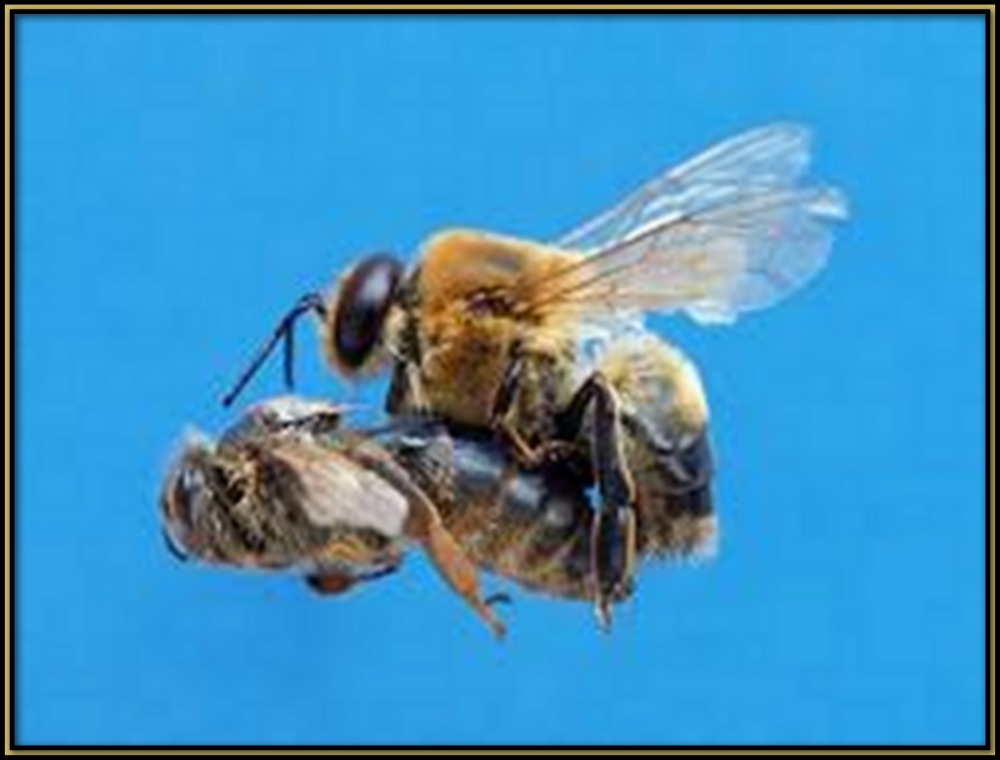
Drones have the largest compound eyes in the colony, often appearing to wrap around the top of their head. This specialized vision helps them detect and track a flying virgin queen during mating flights.
Queens travel to drone congregation areas — locations where drones from many colonies gather in the air. The drones’ large eyes provide enhanced motion detection and a wide field of view, increasing their ability to locate and pursue a queen in flight.
Workers and queens rely more heavily on scent and close-range tasks, but for drones, visual tracking is critical to their role.
Why Drone Brood Attracts Varroa Mites
Drone brood plays a significant role in Varroa mite population growth inside a hive.
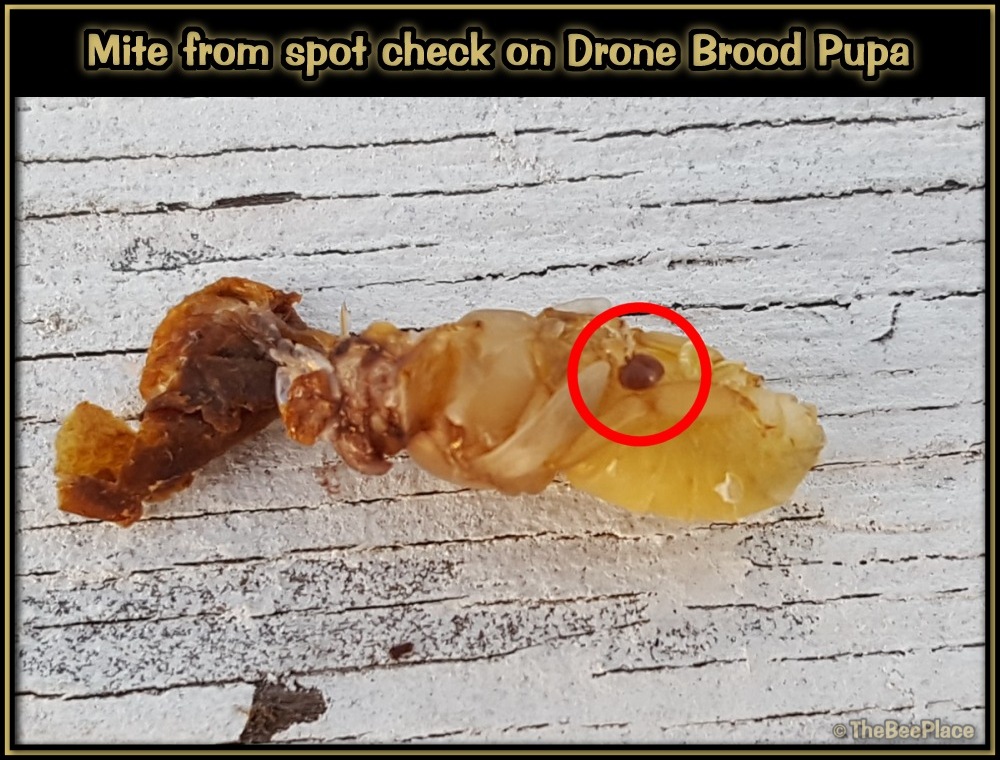
Drones require 24 days to develop from egg to adult, compared to 21 days for worker bees. Most of that additional time occurs during the capped pupal stage. A female Varroa mite entering a drone cell before it is sealed has extra time to reproduce while the developing drone is capped.
In worker brood, a mite may produce one or two viable daughters. In drone brood, she often produces three or more. The longer development period simply allows more reproductive cycles inside the cell.
For this reason, mite levels are frequently highest in drone brood. It is not a weakness of the drone — it is a matter of developmental timing and opportunity.
Drone Brood Removal and Management
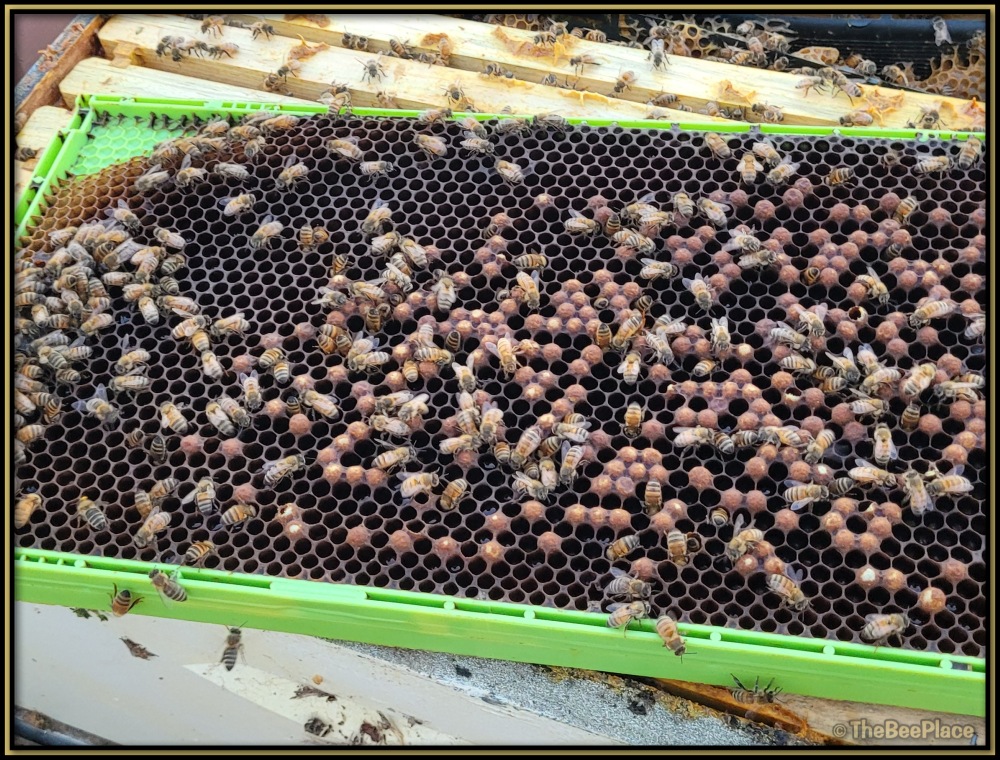
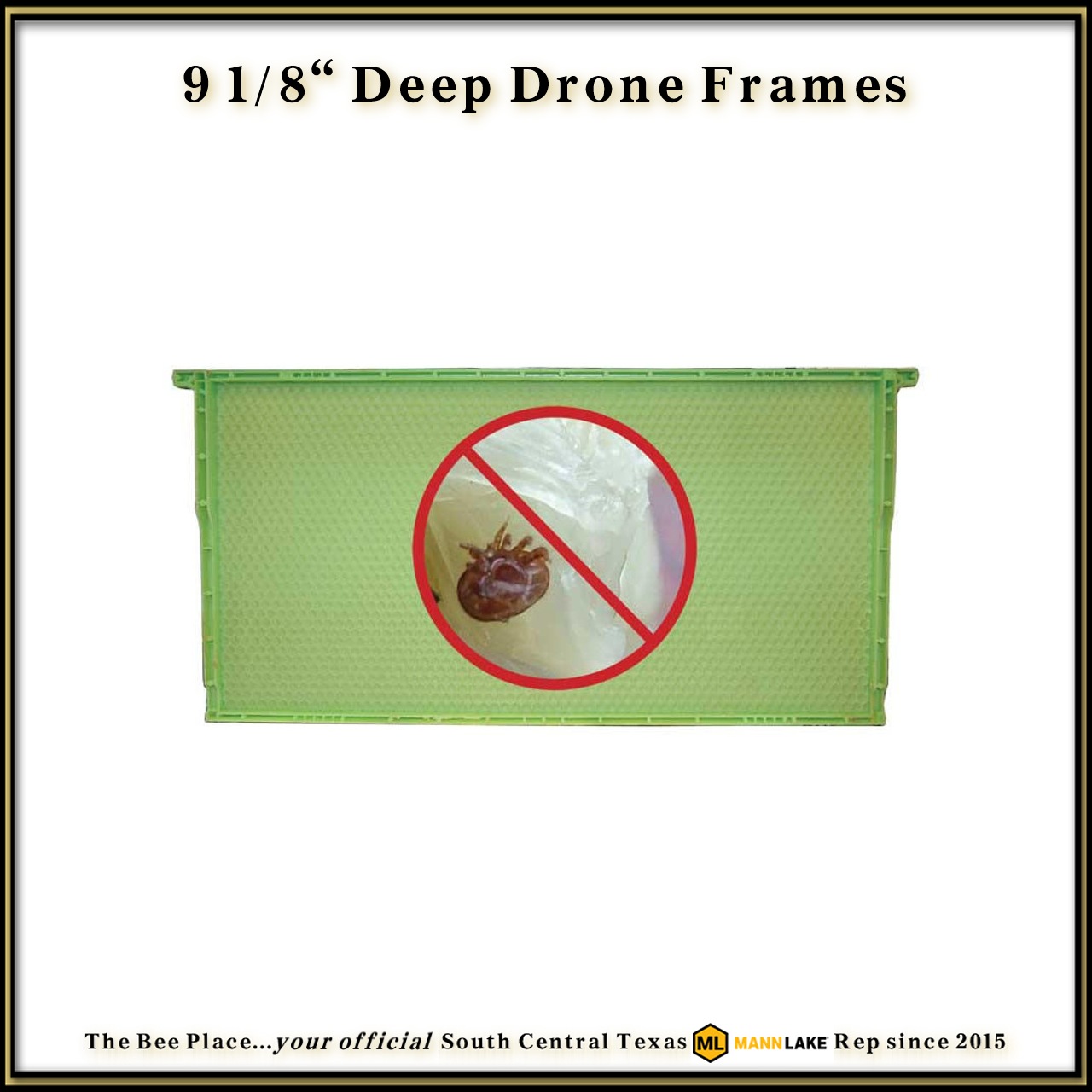
Because mites preferentially reproduce in drone brood, some beekeepers use specialized drone frames to concentrate and remove capped drone brood as a management tool. This practice, often called drone trapping, can reduce mite reproduction when used carefully as part of an overall management plan.
Drone trapping alone is not a complete solution, but it illustrates how understanding honey bee biology helps inform responsible hive management.
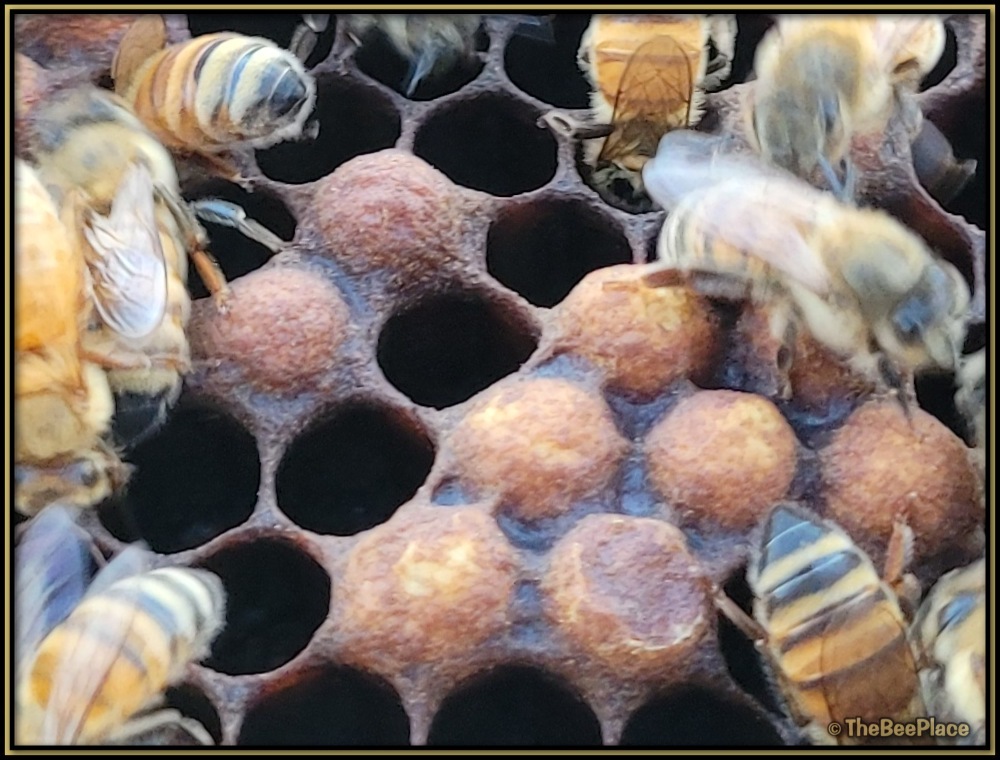
How to Recognize Drone Brood
Drone brood is easy to spot once you know what to look for.
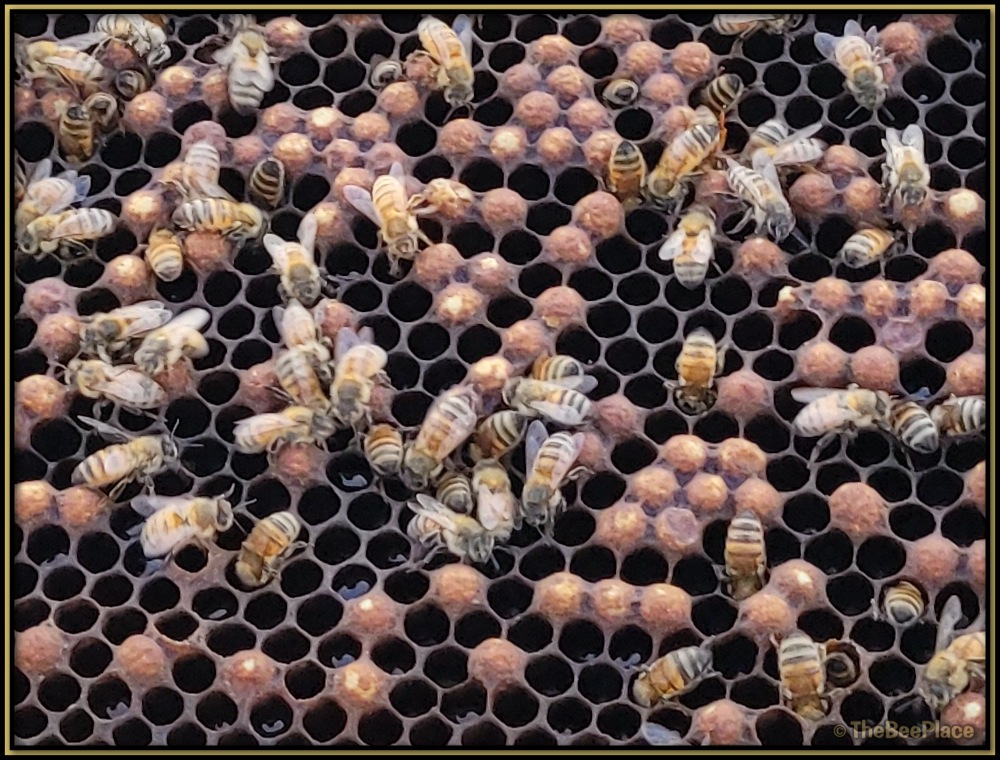
Unlike worker brood, which lies relatively flat and even across the comb, drone brood cells are capped with raised, dome-shaped wax caps that resemble small pencil erasers sticking up from the surface.
These domed caps are usually found along the edges of the brood nest or in clusters within it. Seeing this “bullet-shaped” or “puffed” brood pattern is completely normal and simply indicates that the colony is raising male bees.
Early Drone Control Equipment
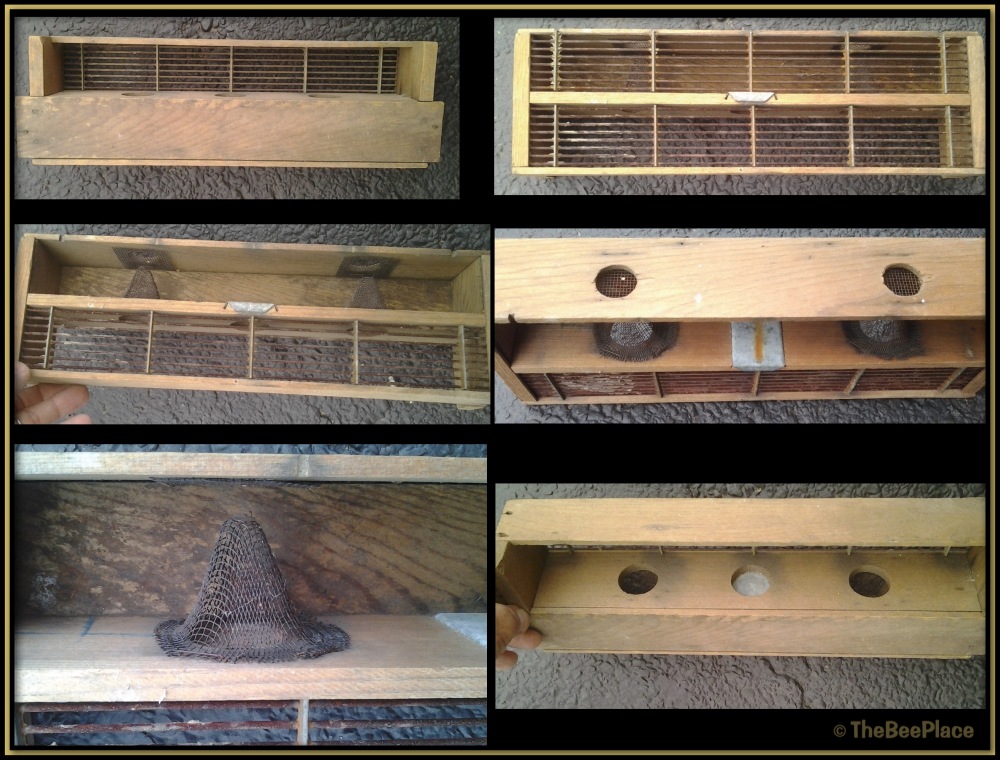
Drone control tools have been part of beekeeping history for decades. The wooden device shown here dates back to the mid-20th century and reflects early attempts to manage drone populations mechanically.
These systems often used one-way cone entrances that allowed drones to exit but made it difficult for them to return to the hive. While modern mite management strategies have evolved, the underlying principle remains the same: understanding drone biology helps beekeepers make informed management decisions.
Even decades ago, beekeepers recognized that drones play an important role in both reproduction and mite population dynamics.
See also: Varroa Mite Management
