

Swarming

Swarming — How Colonies Reproduce
Swarming is not bees in attack mode — it is how a strong colony divides and expands.
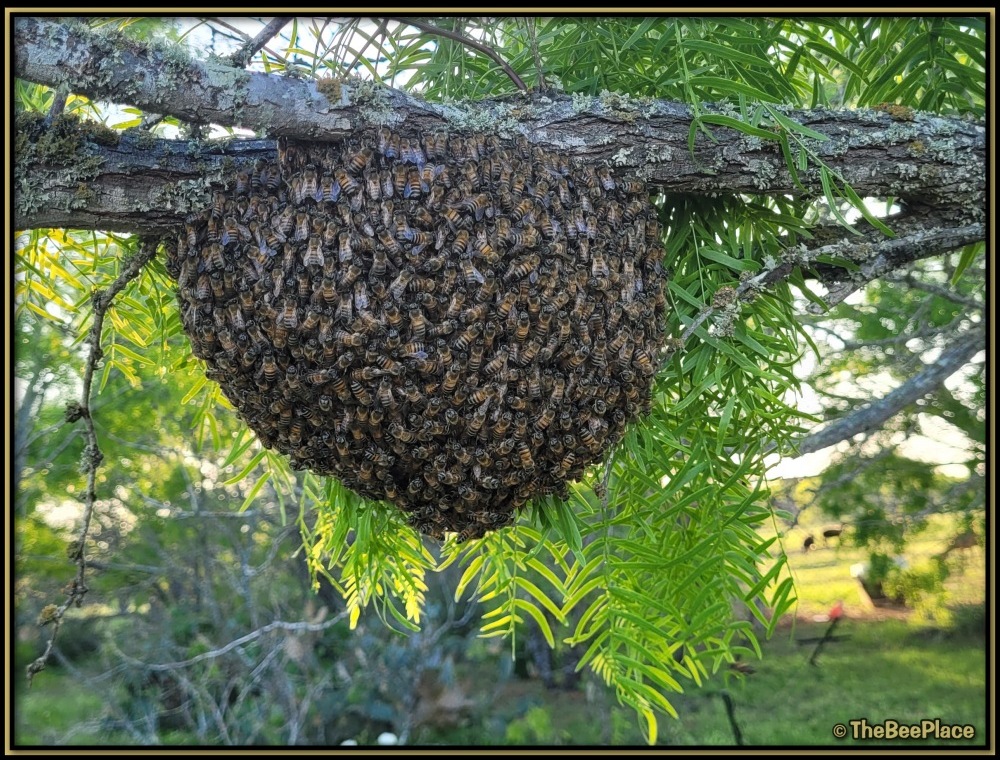
Swarming is the natural method by which honey bee colonies reproduce at the colony level.
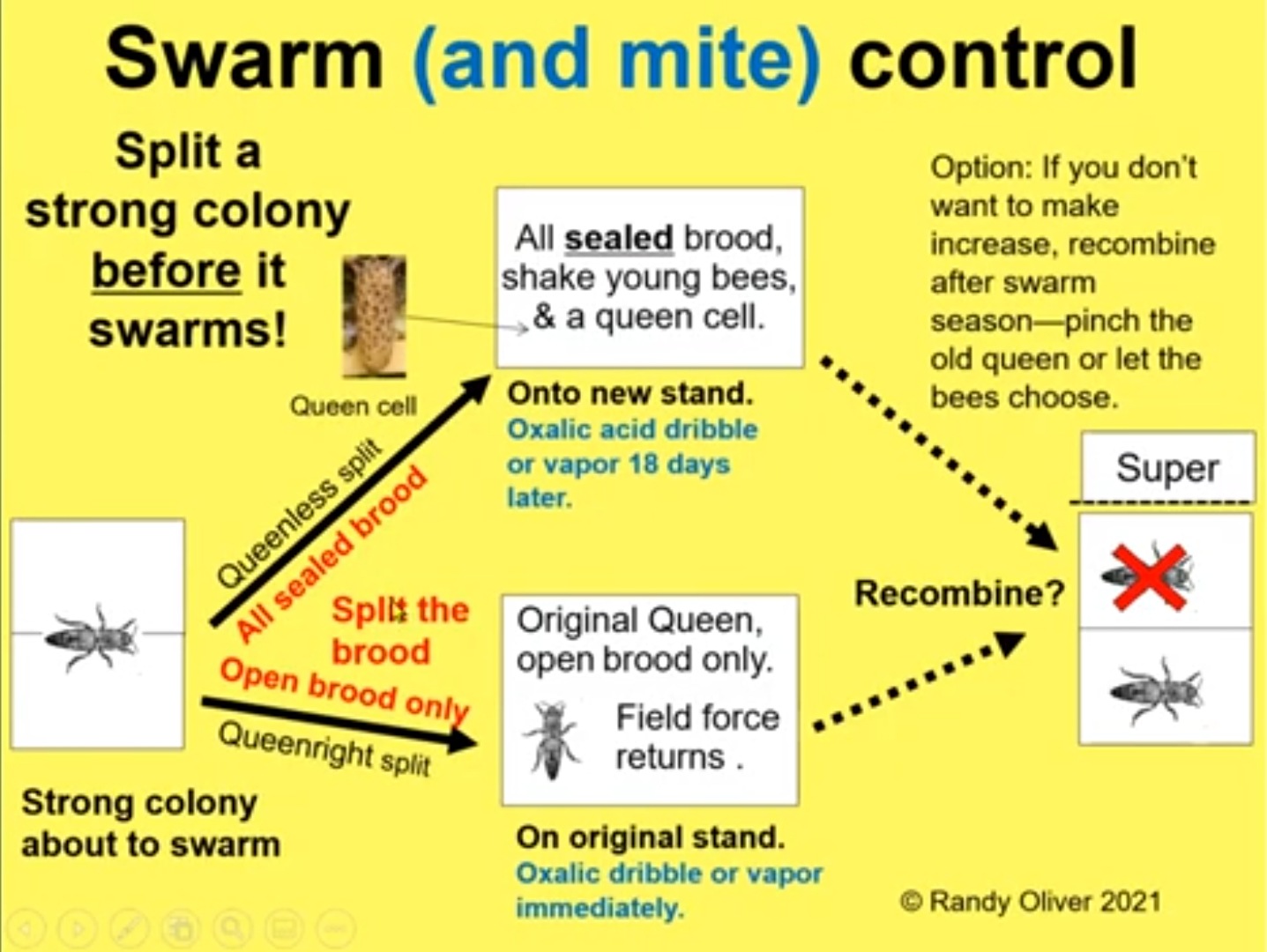
When environmental conditions, colony strength, and available resources align — typically during periods of growth — a healthy colony may divide into two.
Rather than a single insect reproducing, the entire colony splits. One portion leaves with the original queen to establish a new home, while the remaining bees raise a successor queen to continue the original colony.

When Conditions Are Right
Swarming does not happen randomly. Certain conditions must line up.
One of the primary triggers is space — often referred to as “growing room” or “laying room.” If the brood nest becomes congested and the colony has abundant incoming nectar and pollen, internal biological signals shift toward reproduction.
When the colony senses it is strong enough to divide and survive the split, preparation begins.
Internal Preparations
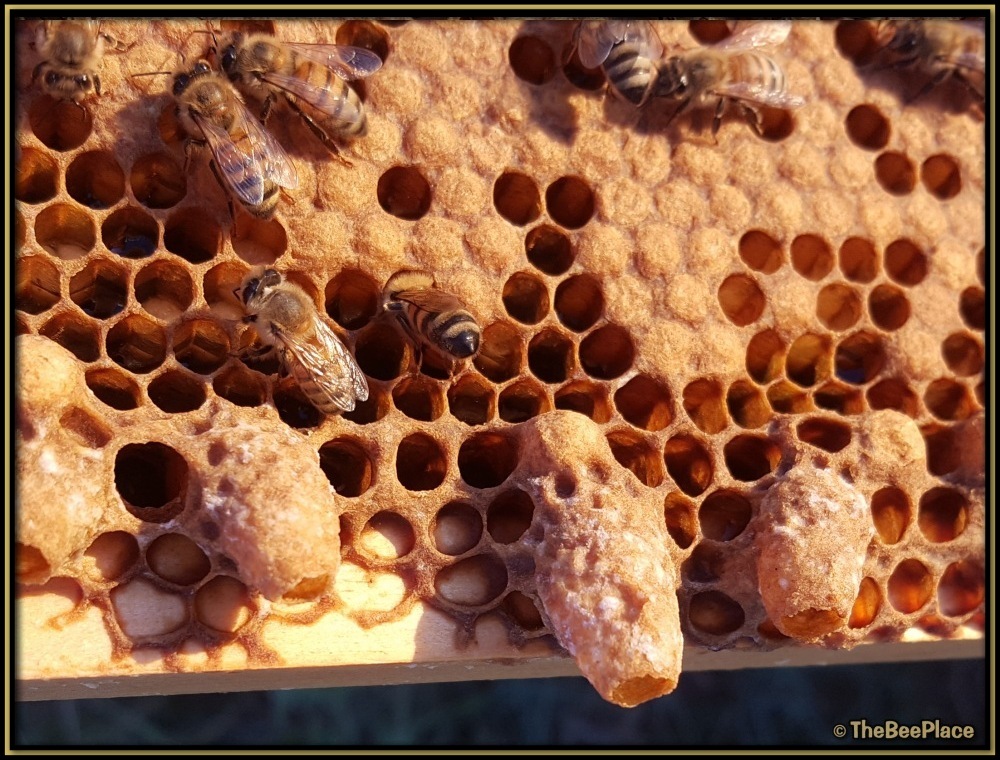
Special elongated queen cells — often called swarm cells — are constructed to raise the next queen.
At the same time, the mother queen is gradually slimmed down. A queen that has been laying heavily must reduce weight in order to fly. Brood production slows as she prepares for departure.
This preparation period typically lasts about a week before takeoff.
The Departure
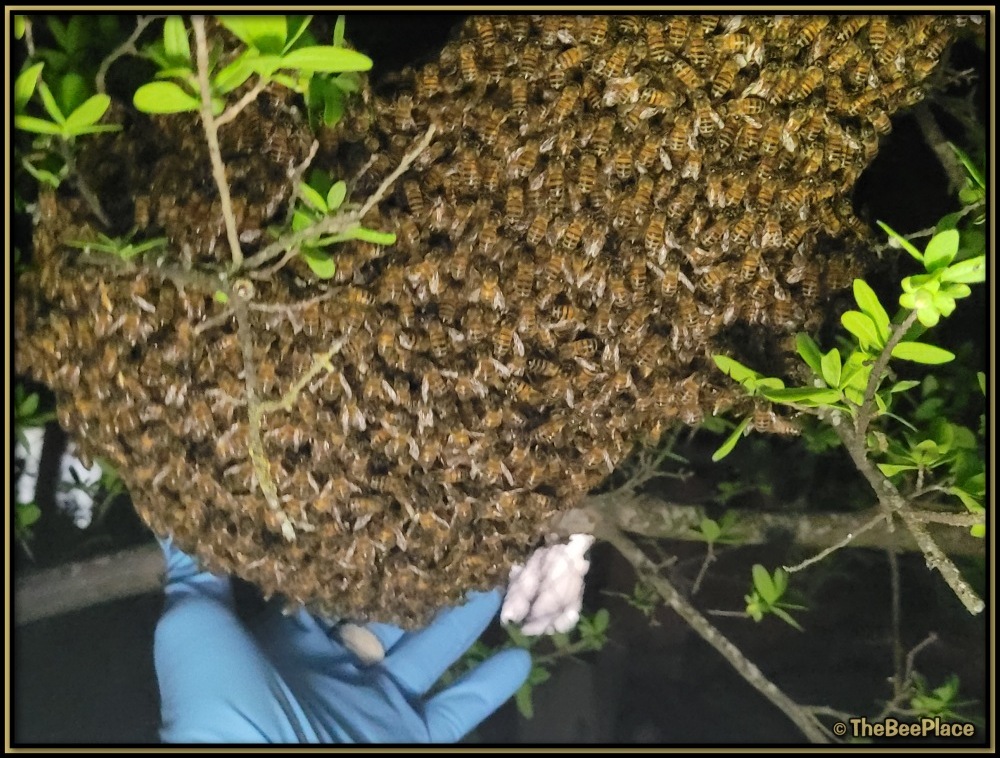
When the colony determines the time is right, a large portion of the workforce leaves with the original queen.
Estimates vary, but commonly somewhere between half and two-thirds of the colony departs — sometimes more depending on conditions.
Thousands of bees pour from the entrance in what appears to be a chaotic cloud. In reality, it is a coordinated relocation event.
A Temporary Resting Spot
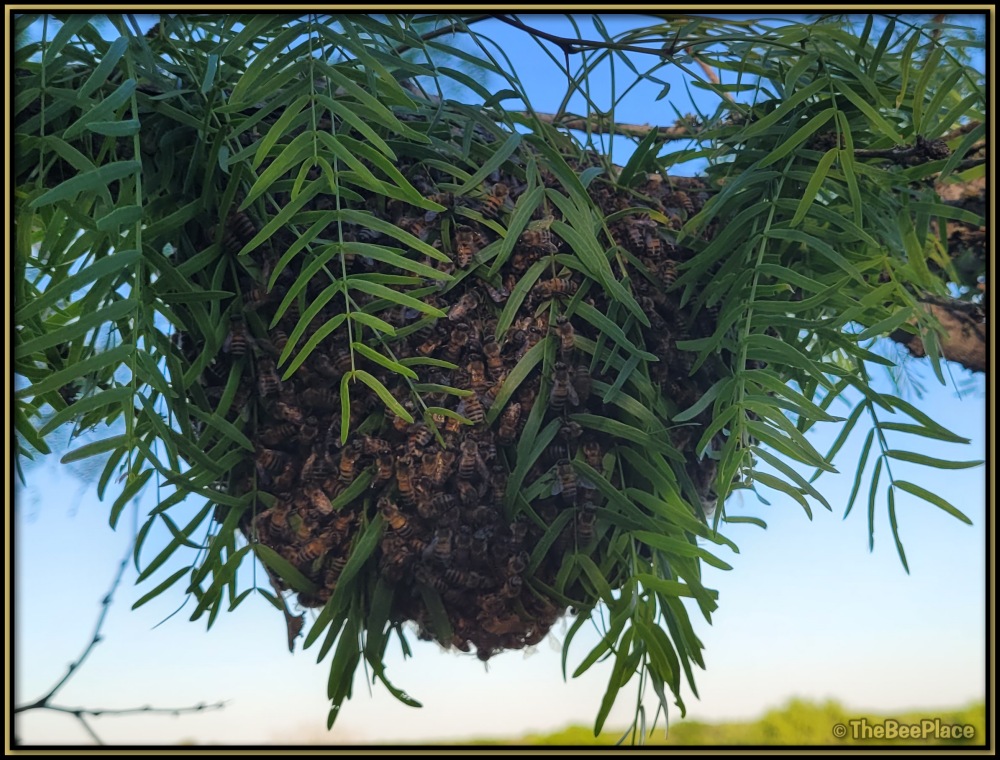
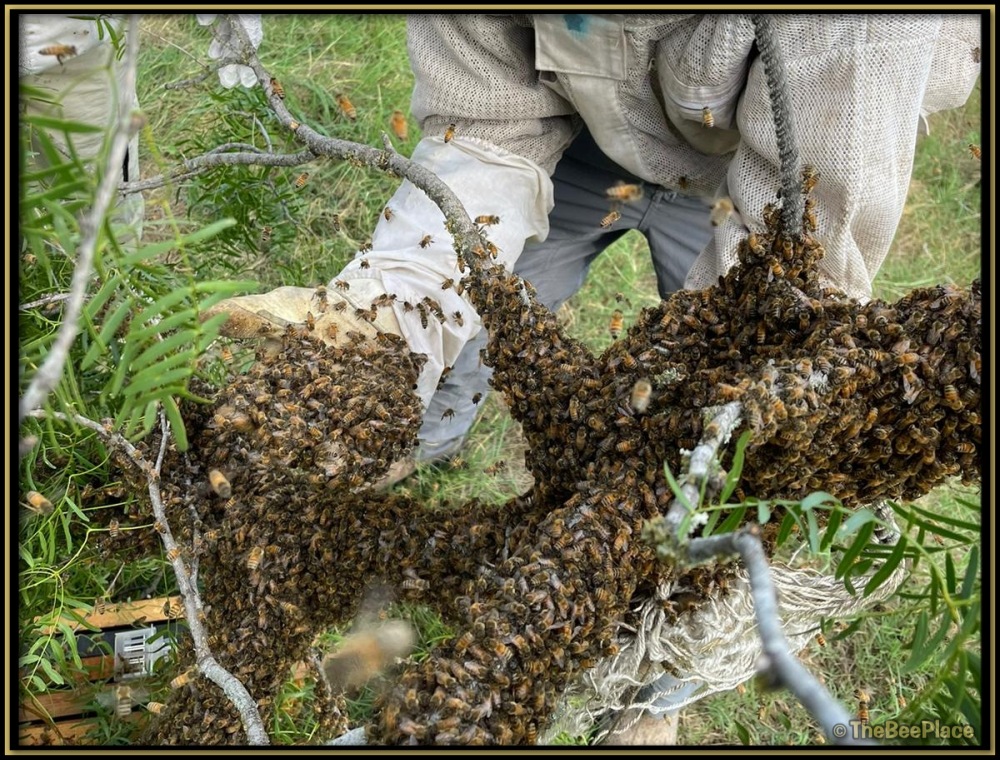
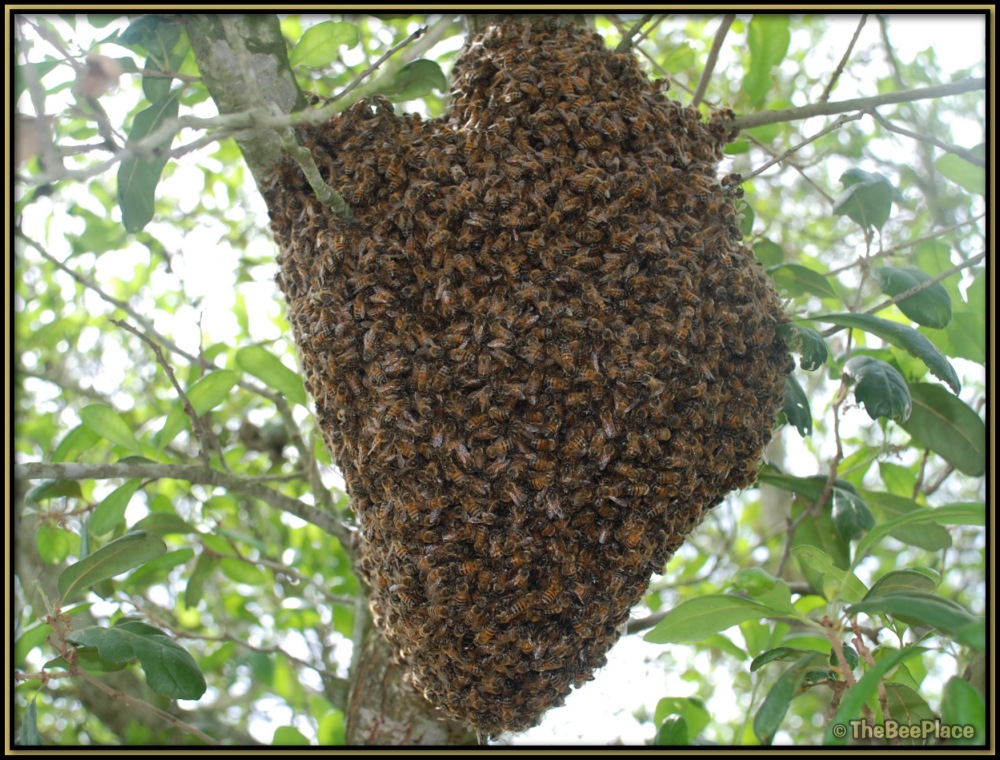
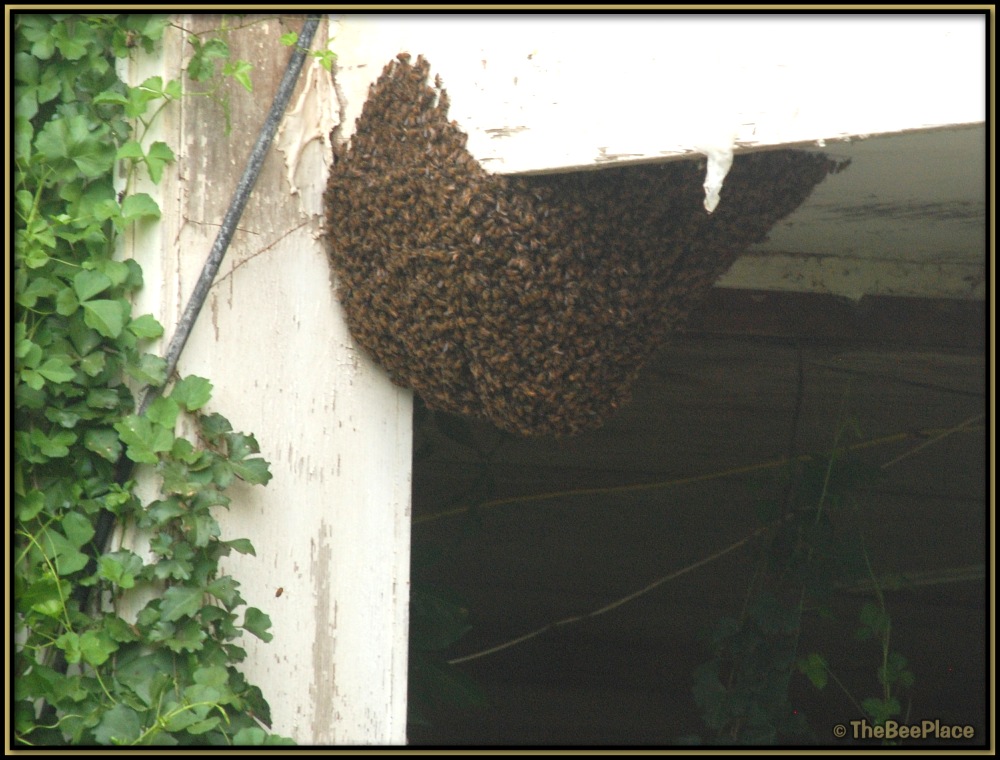
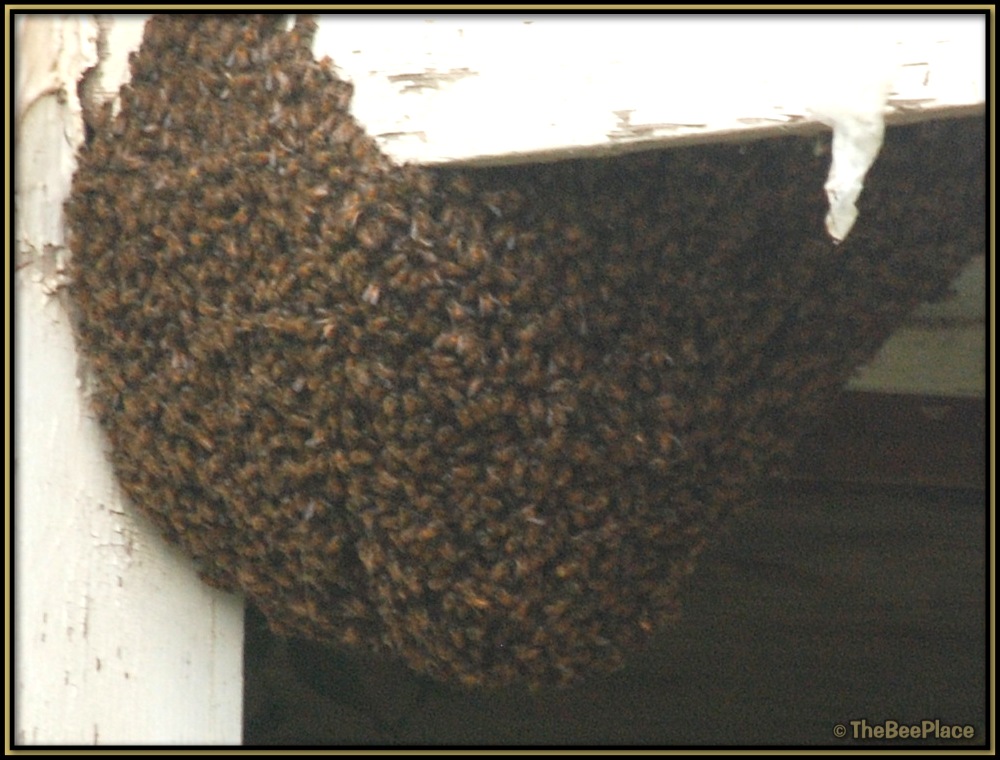
After takeoff, the swarm usually travels a short distance — sometimes only a few hundred yards — and forms a cluster on a tree limb, fence, structure, or other surface.
They often choose a location several feet above ground while scout bees search for a permanent cavity.
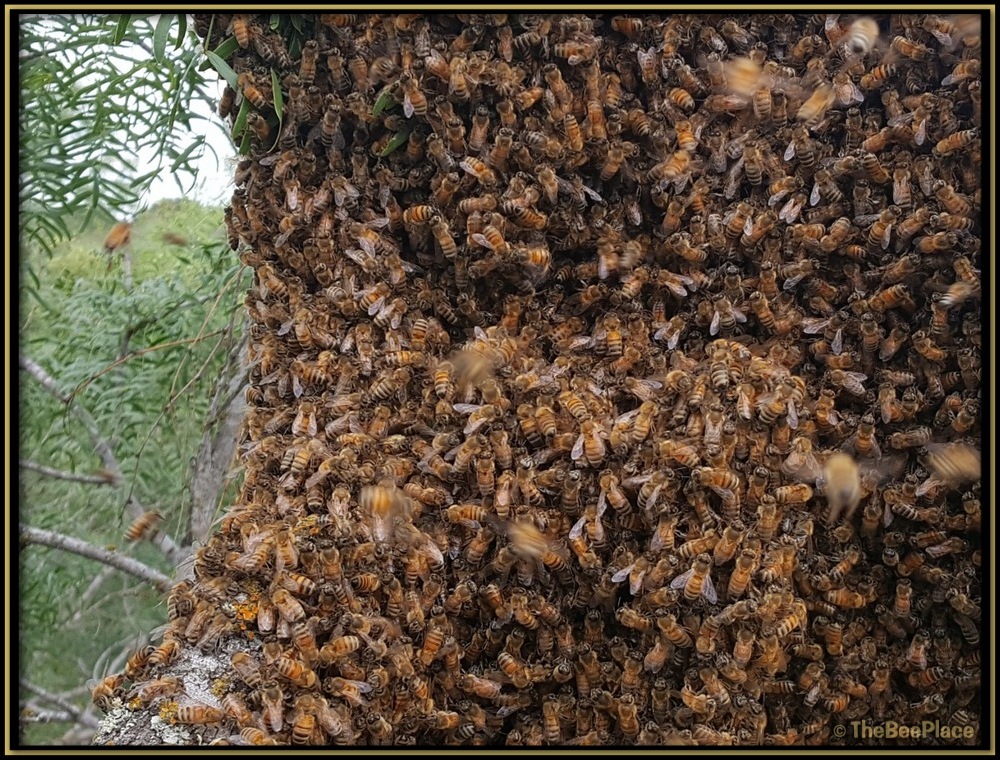
To an observer, this cluster can look intimidating. In most cases, however, the swarm is not defensive during this stage.
Not Aggressive — But Exposed
While in swarm mode, the bees have no brood or food stores to defend.
They are dependent on finding a suitable cavity before their internal honey reserves are depleted. This makes swarming one of the most vulnerable periods in a colony’s life cycle.
Experienced beekeepers often capture swarms with minimal protective gear due to this temporary docile state — though caution and experience are always advised.
The Scout Process
Scout bees begin evaluating potential nest sites for size, shelter, entrance dimensions, and overall suitability.
They communicate findings to the cluster using the waggle dance — directing others to investigate promising locations.
Multiple sites may be considered. Through repeated recruitment and consensus building, the colony eventually agrees on one location. Only then does the swarm take flight again and move into its new home.
Much of what we understand about this remarkable decision-making process comes from careful field research conducted by entomologists studying wild colonies.
Is It a Swarm — or a Hive?
Not every cluster of bees is a swarm.
A true swarm is a temporary resting cluster that is visibly exposed.
If you see only a few bees flying in and out of a crack in a wall, hollow tree, or structure, that is likely an established colony that has already taken up residence. Those bees will defend their home and young.
Maintaining distance and contacting an experienced beekeeper is always the safest approach.
If You Discover Bees on Your Property
Keep a safe distance.
Do not spray or disturb the bees.
Even though swarms are typically calm, genetics and local conditions matter — especially in regions where Africanized genetics are part of the feral population.
Contact a qualified local beekeeper for proper assessment and assistance.
Modern Pressures
While swarming is a natural reproductive strategy, modern landscapes present challenges that did not exist in earlier eras.
Habitat reduction, monoculture agriculture, traffic corridors, and widespread chemical use all influence survival rates for both new and established colonies.
Observing, understanding, and making thoughtful environmental choices can help improve the odds for pollinators in our communities.
