

Feeding Bees

Fat Bees are Healthy Bees
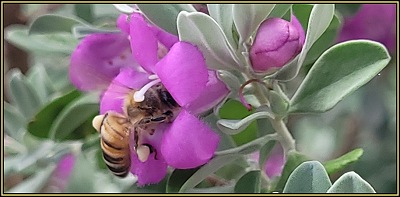

Honey bees gather most of their food from flowers in the form of nectar and pollen. When conditions are good and plants are producing well, colonies can usually provide everything they need for themselves.
However, flowers alone do not always guarantee food for a hive. Nectar production depends on moisture in the soil, weather conditions, and seasonal bloom cycles. During hot summers, drought periods, or other times when little nectar is available, colonies may struggle to bring in enough resources to support the hive.
When natural forage becomes limited, beekeepers often step in and help the colony by providing supplemental food such as sugar syrup, pollen substitutes, or other nutritional support. These resources help the bees maintain brood production and stay strong until natural food sources return.
The goal is simple: strong colonies with plenty of resources tend to remain productive, healthy, and better able to handle the challenges they face throughout the year.
We all have to eat

When Bees Need Feeding
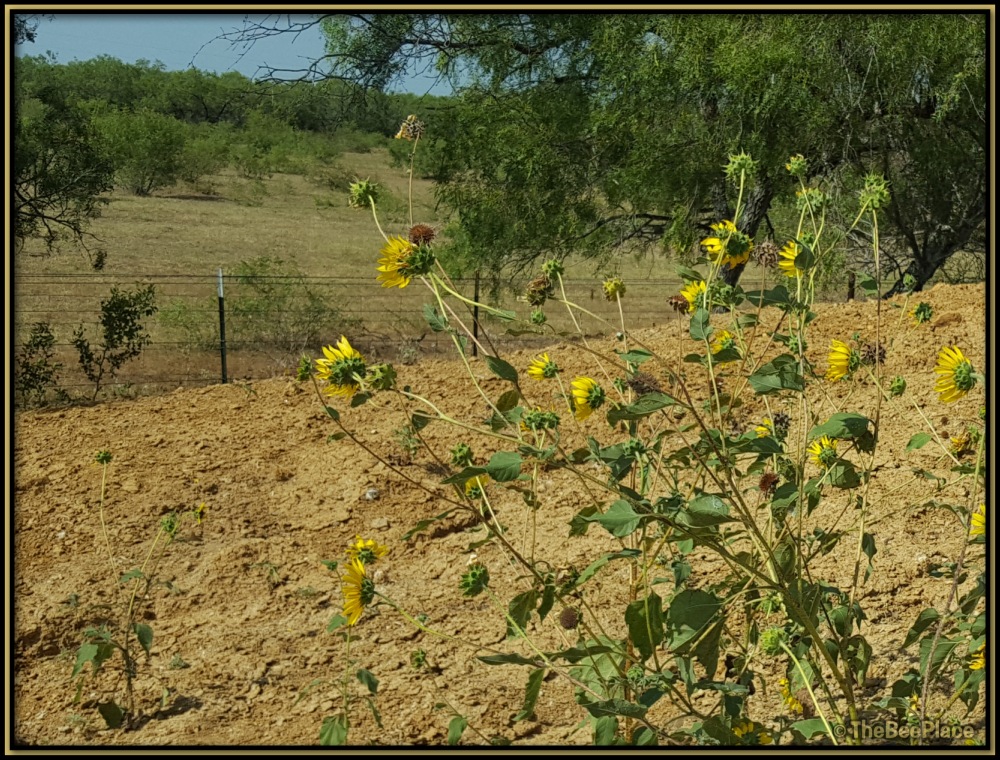
Seeing flowers in bloom does not always mean bees have food available. Nectar production depends heavily on moisture in the soil and favorable weather conditions. During hot summers and drought periods, many plants may bloom but produce very little nectar.
In south central Texas this is common during the summer heat, but can also occur in the spring, or anytime when the ground becomes dry and the plants slow down nectar production. Bees may still gather small amounts of pollen, but the carbohydrates they need from nectar can become scarce.
When natural food coming into the hive slows down, colonies may begin using up their stored reserves. If the shortage continues long enough, brood production will slow and the colony can begin to weaken and can eventually starve a slow ugly death.
During these periods, beekeepers need to provide supplemental feeding to help colonies maintain strength until natural nectar flows return or they build up enough reserves of sugar syrup to sustain the colony.
Brood Rearing Depends on Food
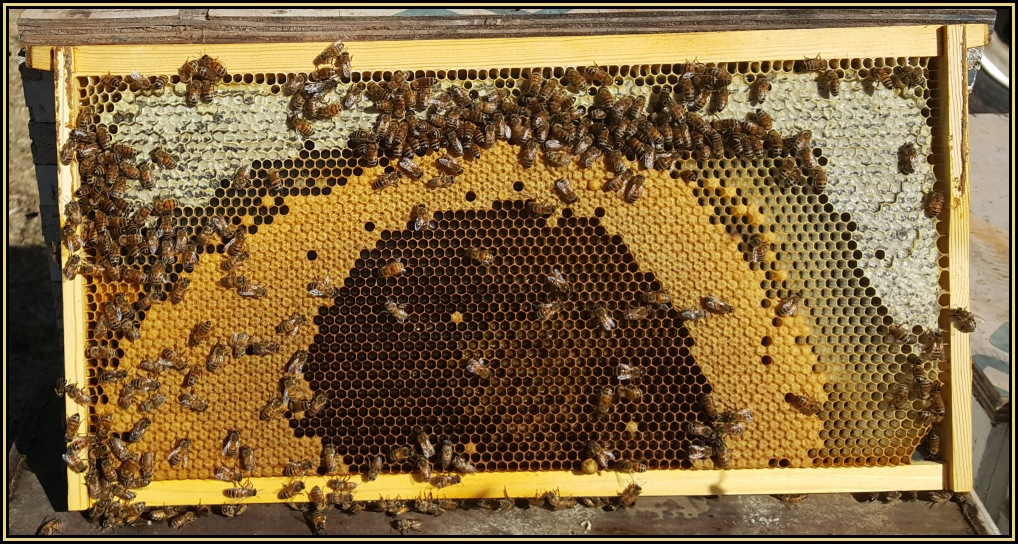
A healthy colony raises young bees continuously as long as enough food is available to support them. Inside the hive, nurse bees produce brood food used to feed developing larvae, which requires a steady supply of nectar and pollen.
When resources become scarce, the colony must protect itself from raising more young than it can feed. In these situations, worker bees may consume freshly laid eggs and very young larvae to recycle the valuable protein and prevent the colony from expanding beyond what the available food supply can support.
For new beekeepers this behavior can sometimes be confusing. Many people are taught that seeing eggs means the queen is present, which is normally true. However, when colonies are short on food, eggs may be removed quickly after being laid. This can give the appearance that the queen has stopped laying or that the colony is queenless when the real problem is simply a lack of incoming food.
For this reason, whenever brood production appears to slow down unexpectedly, it is important to also evaluate the colony’s food supply and the conditions outside the hive.
Carbohydrates and Protein
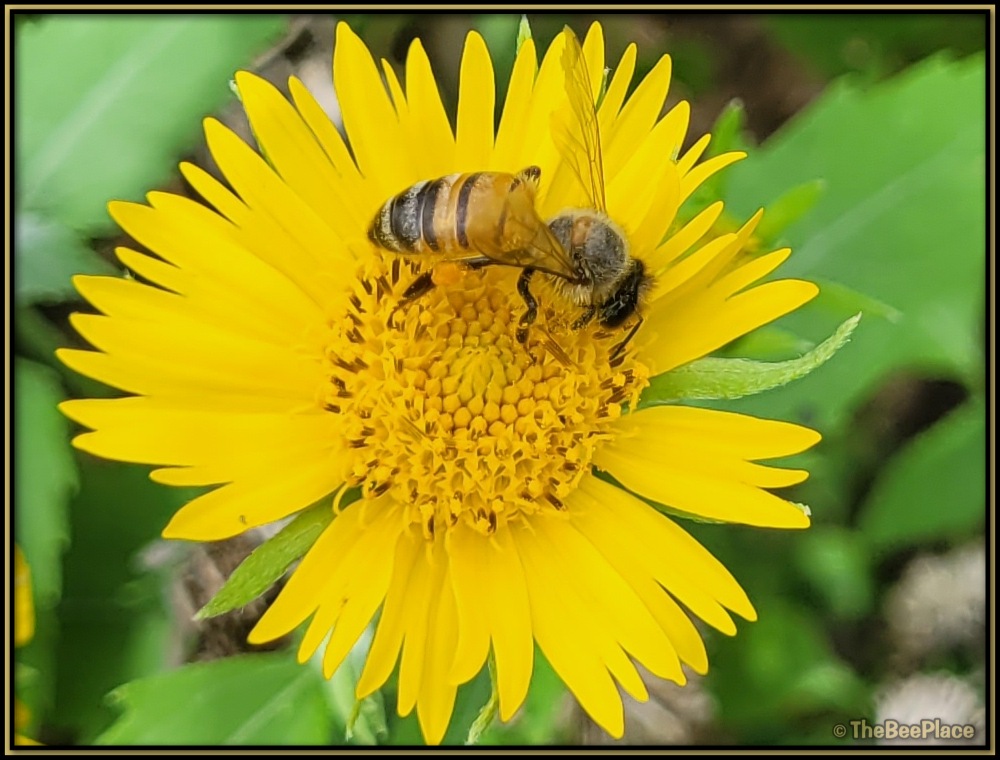
Like all living creatures, honey bees require a balanced diet to remain healthy and productive. In nature, bees gather two primary food sources from flowers: nectar and pollen.
Nectar provides carbohydrates, which the bees convert into honey and use as their primary energy source. This energy fuels nearly every activity in the hive, including flying, maintaining hive temperature, and processing food.
Pollen provides the protein, vitamins, and minerals needed for brood production. Nurse bees consume pollen and convert it into brood food used to feed developing larvae. Without an adequate supply of pollen, colonies cannot raise healthy young bees.
For this reason, strong colonies depend on a steady supply of both nectar and pollen. When either resource becomes limited, brood production slows and colony growth may stall until conditions improve.
Feeding Sugar Syrup
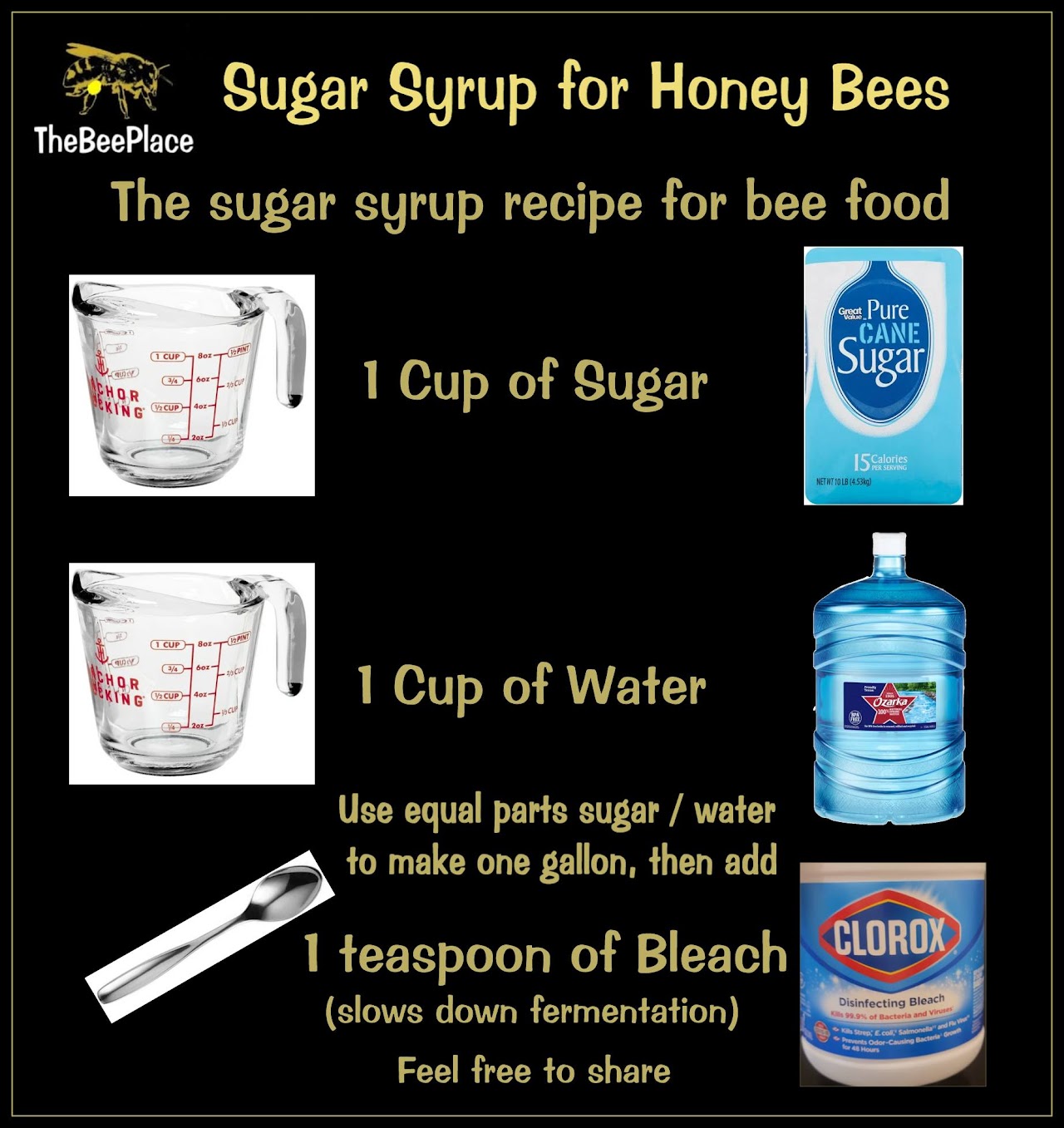
When natural nectar becomes scarce, beekeepers often provide sugar syrup to help colonies maintain strength until flowers begin producing nectar again. Sugar syrup supplies the carbohydrates bees normally obtain from nectar and can help prevent colonies from exhausting their stored honey during difficult periods.
In south central Texas, a common feeding mixture during the warm months is a **1:1 ratio of sugar to water**. As cooler weather approaches, many beekeepers switch to a **2:1 ratio**, which provides a thicker syrup that bees can store more easily.
Sugar syrup can begin to ferment or grow mold if it sits too long, especially during warm weather. For this reason, a small amount of unscented household bleach is sometimes added to slow fermentation and help preserve the mixture while it is being consumed.
When feeding syrup, it is important to monitor how quickly the bees take it. If the feeder remains full for an extended period, the syrup may spoil and should be replaced with fresh feed. - This is also a sign something is not right with the colony. Heathy bees will normally consume the syrup before it can sour.
Feeding during a nectar dearth must also be done carefully. The scent of syrup can attract bees from neighboring colonies and trigger robbing behavior. Understanding how robbing begins and how to prevent it is an important part of feeding colonies safely.
See also: [LINK:/help/pests-and-problems/robbing/Robbing Behavior]
Feeding Pollen
While sugar syrup provides energy in the form of carbohydrates, bees also require protein to raise healthy brood. In nature, this protein comes from pollen collected from flowers and stored inside the hive as “bee bread.”
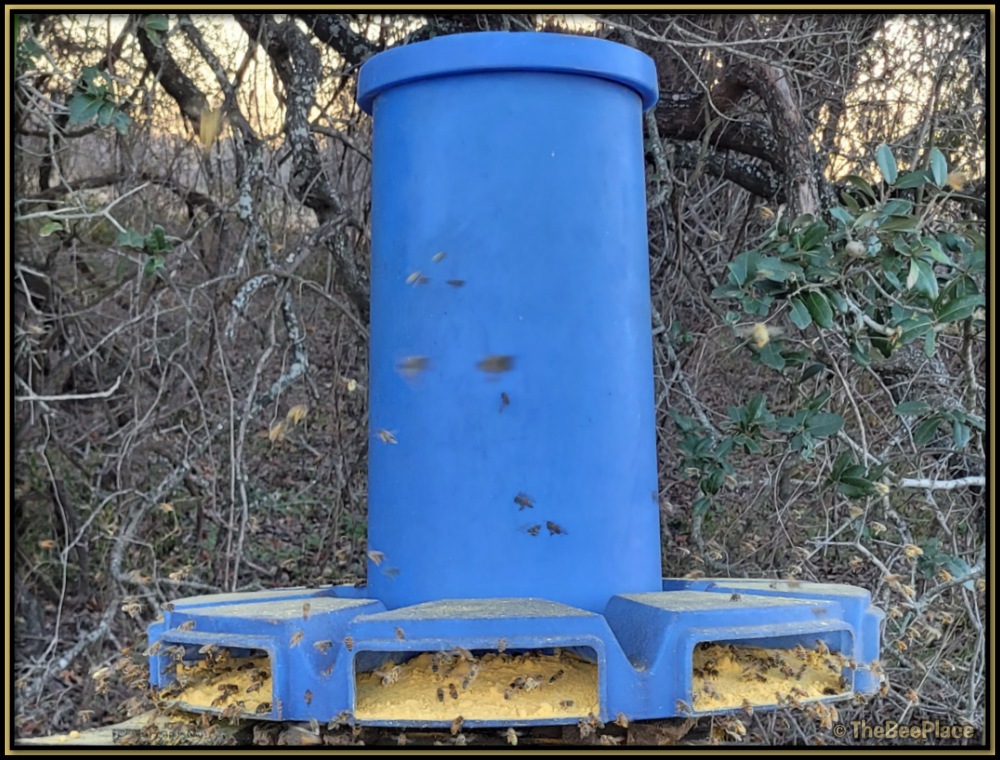
During times when little pollen is available in the field, beekeepers may provide pollen substitutes or supplemental pollen to help colonies maintain brood production. These supplements are commonly offered in the form of pollen patties placed inside the hive or dry pollen feeders placed outside the apiary.
Bees will usually collect supplemental pollen only when they need it. If natural pollen becomes available again, they often ignore the substitute and return to gathering fresh pollen from flowers.
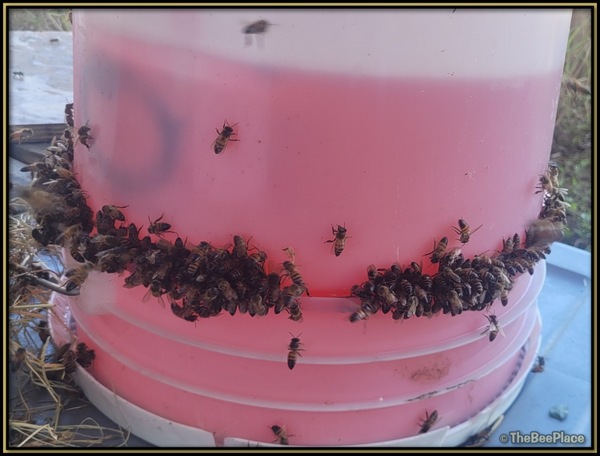
For beekeepers managing multiple colonies, larger feeders like this one allow many hives to collect pollen supplements at the same time. Smaller apiaries often use simpler feeders or pollen patties placed directly inside the hive.
Providing protein during periods of shortage can help colonies remain strong and continue raising young bees until natural pollen sources return.
Nutritional Supplements
In addition to basic feeding with syrup and pollen substitutes, some beekeepers occasionally provide nutritional supplements designed to support colony health during periods of stress or limited natural forage.
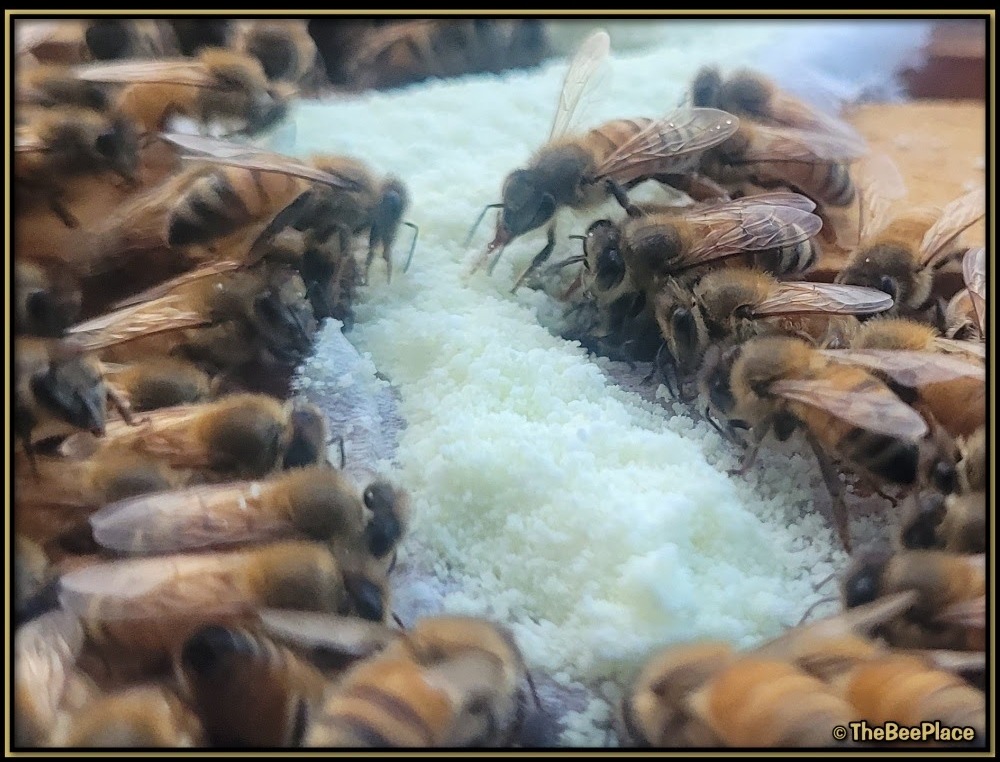
One example is **MelliferaBoost**, a powdered supplement that can be lightly applied across the top bars inside the hive. The bees consume the powder directly while moving through the cluster. Some beekeepers use this type of supplement a few times each year, often applying two treatments about two weeks apart when natural resources are limited.
Another commonly used feeding additive is **Pro Health™**, an essential oil–based supplement made with lemongrass and spearmint oils. When mixed with sugar syrup, it can help encourage consistent feed consumption and is often used when establishing new colonies, feeding packages or nucs, or during periods when nectar is scarce.
Essential oil supplements are sometimes used to help maintain syrup freshness and encourage bees to take feed more readily. Some beekeepers also apply a light spray of syrup mixed with essential oils to encourage bees to draw foundation or during hive work.
Like all feeding practices, supplements are most helpful when used to support colonies during periods when natural food sources are limited. Strong colonies still depend primarily on good forage conditions and proper nutrition from the field.
Open Feeding
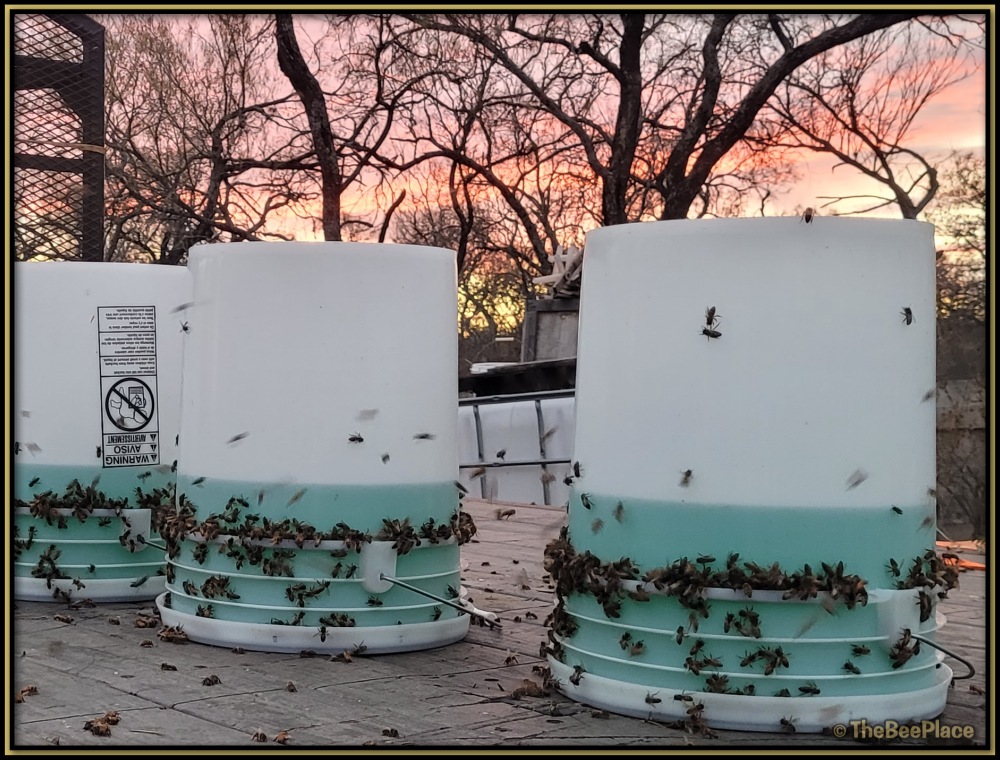
Some beekeepers choose to provide sugar syrup using open feeders placed away from the apiary rather than feeding directly inside each hive. This method allows many colonies to collect syrup from a central location and can be helpful when managing larger numbers of hives.
Open feeding must be done carefully because large amounts of exposed syrup can trigger an intense feeding response. Bees from many colonies may gather quickly, creating a feeding frenzy that can lead to robbing behavior if the syrup source is too close to the hives.
For this reason, open syrup feeders should generally be placed well away from the apiary, generally 100 yards or more from the hives, so bees do not begin investigating neighboring colonies if the source runs dry or is close to the hives for the bees to smell. (see the Robbing page for more info)
Simple feeders are often made from inverted buckets or containers that slowly release syrup through small openings at the base. Bees gather around the feeder and collect the syrup much like they would nectar from flowers.
It is worth noting that pollen substitutes do not create the same robbing response that syrup can. Pollen feeding stations can usually be placed closer to the apiary without triggering the aggressive competition that syrup sometimes causes.

Feeding Bees at Scale
Many new beekeepers are surprised to learn how much feeding actually takes place in modern beekeeping. While healthy colonies prefer natural nectar and pollen, there are many times when nature simply does not provide enough resources to support the needs of the hive.
During droughts, long dearth periods, or when colonies are being built up for pollination, feeding becomes an important management tool. Even large commercial operations that manage thousands of colonies must regularly supplement their bees when natural forage is limited.

Feeding bees is serious business

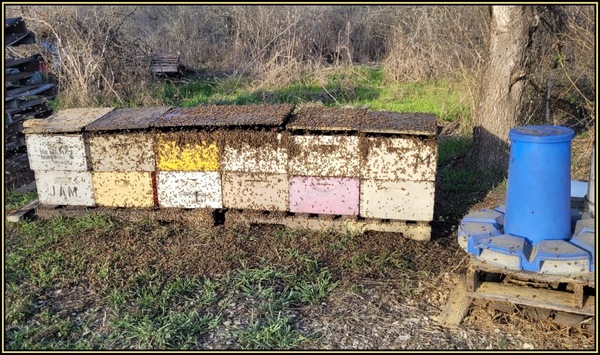
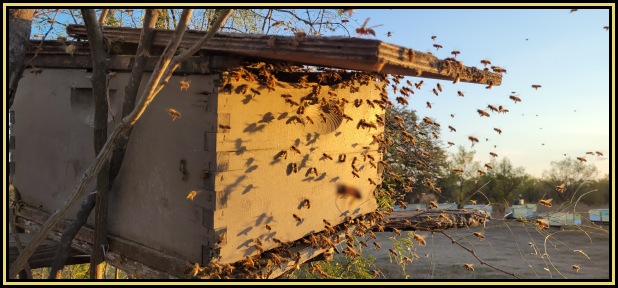

Commercial beekeepers may spend tens of thousands of dollars a year on syrup and pollen subs just to keep colonies alive during tough seasons during drought conditions.
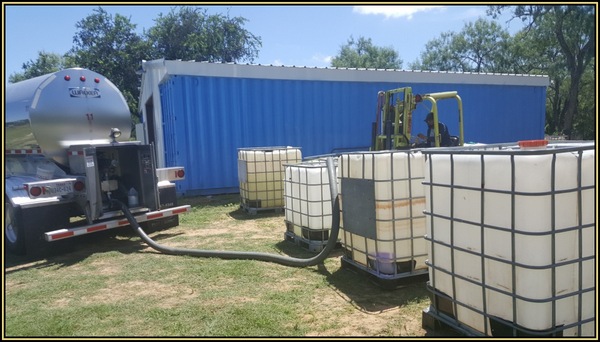
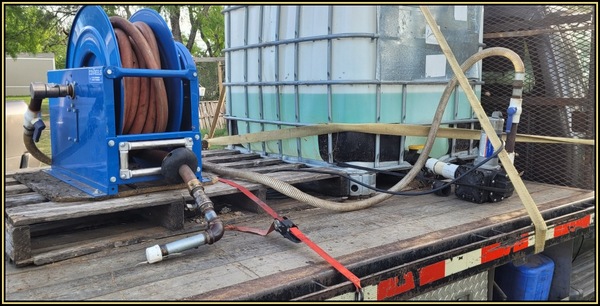
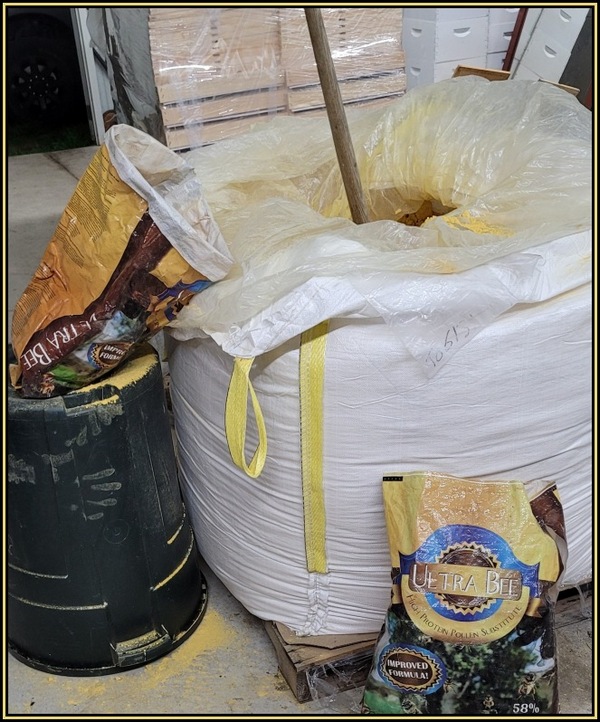
The images above show a glimpse of what feeding can look like at a larger scale. Commercial beekeepers often purchase syrup in tanker loads and distribute it throughout their apiaries using pumps, storage tanks, and mobile feeding systems.
A single tanker load of syrup can cost well over fifteen thousand dollars and may only support several hundred colonies for a limited period of time. When you consider how quickly strong colonies consume resources, it becomes clear why feeding bees is taken seriously across the entire industry.
For smaller beekeepers the scale is different, but the principle remains the same. If the bees do not have enough food coming in from the environment, the beekeeper must step in and provide support until conditions improve.
Feeding bees is only part of keeping colonies healthy — understanding when to feed, how to feed safely, and how to avoid problems like robbing are all part of responsible hive management.
